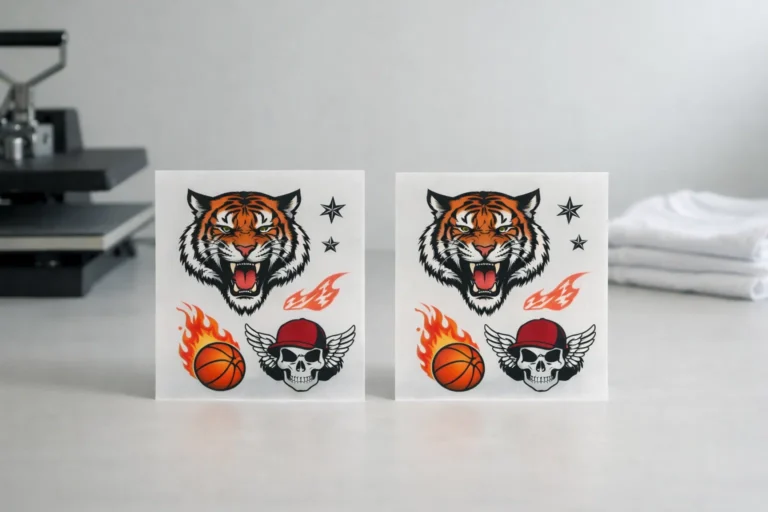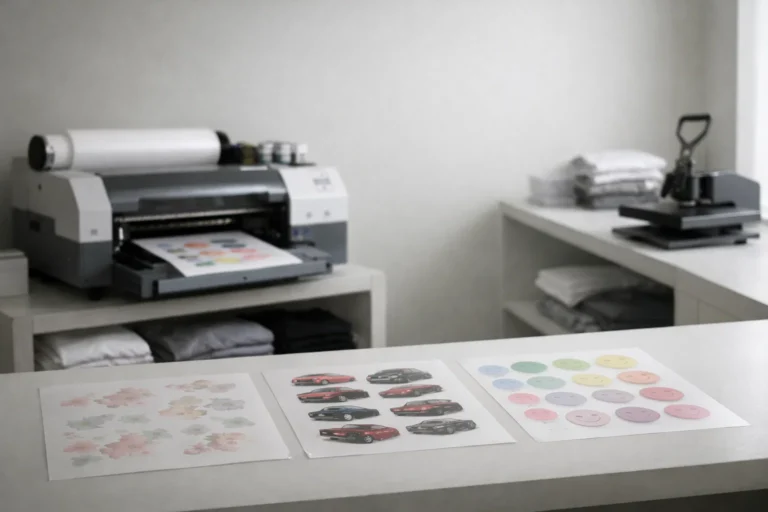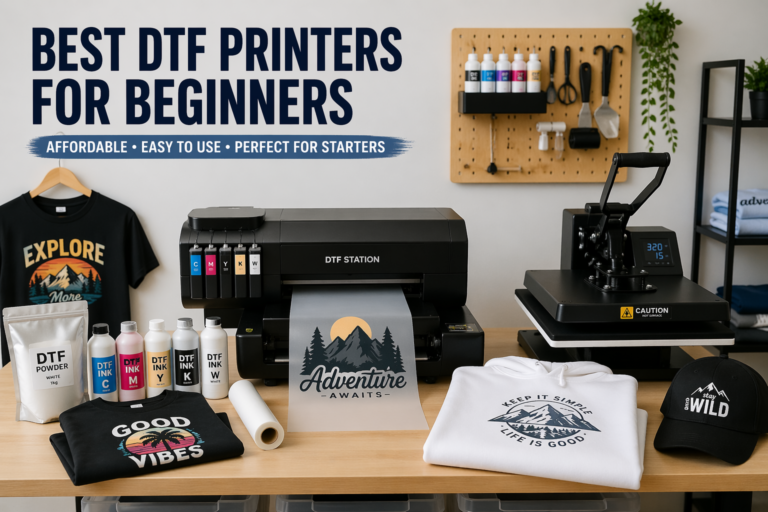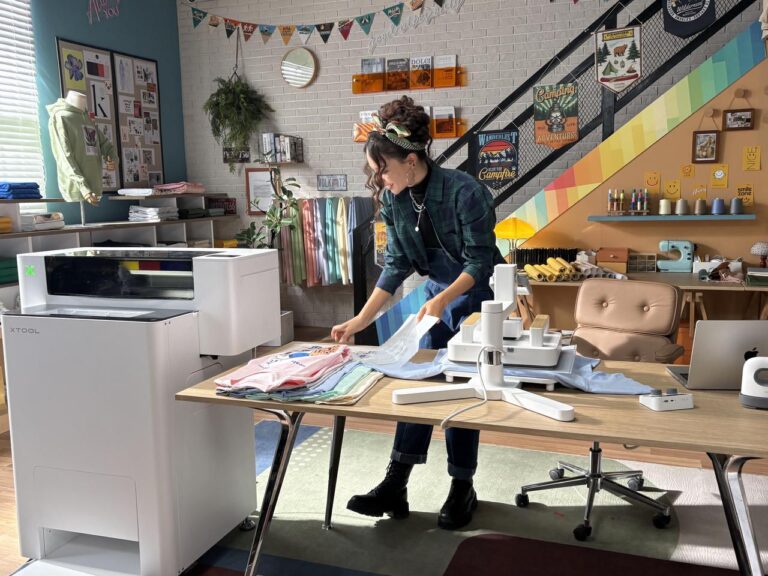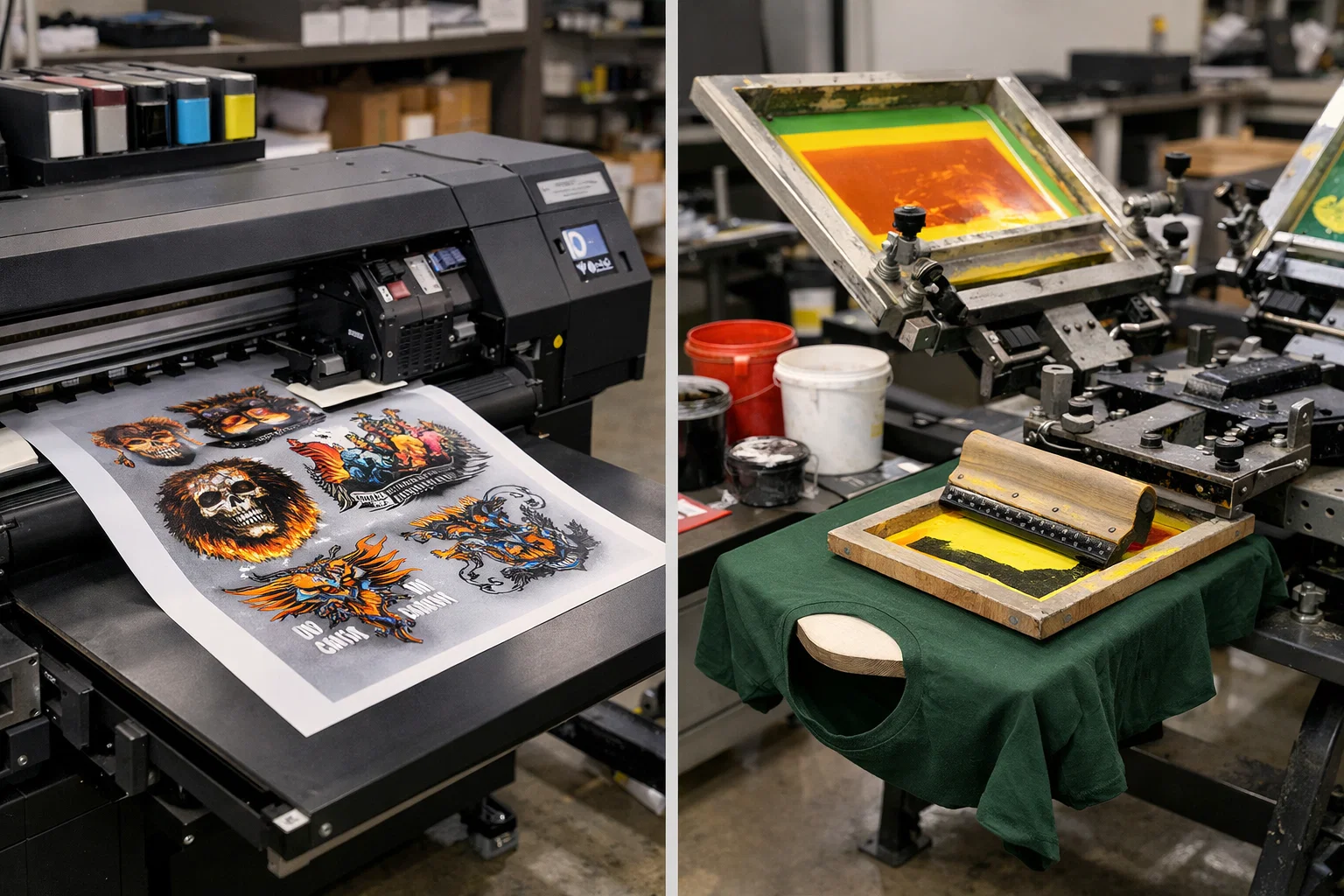
A side by side comparison of DTF printing and traditional screen printing methods used in modern apparel production.
As apparel production continues to evolve in 2026, print shops and clothing brands face a familiar but increasingly important question: DTF printing or screen printing?
Both methods dominate different segments of the apparel industry, but changes in technology, labor costs and demand for customization are reshaping how businesses choose between them.
This in-depth comparison breaks down cost, speed, print quality and real-world use cases, helping print shops, startups and apparel brands make the right decision for 2026 and beyond.
What Is DTF Printing?
DTF (Direct to Film) printing is a digital transfer method where designs are printed onto a special PET film using DTF inks and white ink. A powdered adhesive is applied, cured, and the design is then heat-pressed onto fabric.
Unlike traditional methods, DTF does not require screens, cutting, or fabric-specific preparation. It works on cotton, polyester, blends and even dark garments with minimal setup.
In recent years, DTF has grown rapidly due to its flexibility, lower startup costs and ability to handle small or custom orders efficiently.
What Is Screen Printing?
Screen printing is a traditional apparel printing technique that uses mesh screens and stencils to apply ink directly onto fabric. Each color requires a separate screen, making setup more complex but extremely effective for large production runs.
Screen printing remains the industry standard for bulk orders, especially when producing hundreds or thousands of identical garments.
Cost Comparison: DTF vs Screen Printing
Startup Costs
DTF printing generally has a lower barrier to entry.
A typical DTF setup in 2026 includes:
-
DTF printer
-
RIP software
-
Heat press
-
Consumables (film, ink, powder)
Screen printing requires:
-
Screens and exposure unit
-
Washout booth
-
Drying system
-
Multiple inks
-
Larger workspace
For small businesses or first-time apparel entrepreneurs, DTF is significantly more affordable upfront.
Cost Per Print
-
DTF printing has a consistent cost per print, regardless of design complexity or color count.
-
Screen printing becomes cost-effective only at higher volumes, where setup costs are spread across many units.
For short runs, DTF is cheaper. For large bulk orders, screen printing still wins on unit cost.
Speed and Production Efficiency
Setup Time
DTF excels in setup speed. Designs can be printed and transferred almost immediately after file preparation.
Screen printing requires:
-
Screen preparation
-
Ink mixing
-
Registration
-
Test prints
This setup time makes screen printing slower for small or rush orders.
Production Speed
Once running, screen printing is faster for high volumes. A skilled operator can print hundreds of shirts per hour.
DTF is faster for:
-
One-off designs
-
Personalization
-
Multi-color artwork
-
On-demand production
Print Quality and Durability
Image Detail and Color
DTF printing produces:
-
High-resolution images
-
Smooth gradients
-
Photographic detail
-
Consistent color output
Screen printing delivers:
-
Bold, vibrant colors
-
Excellent opacity
-
Classic ink texture preferred for certain styles
Durability
When applied correctly:
-
Both methods are durable and long-lasting
-
Screen printing has a slight edge in longevity for heavy industrial use
-
Modern DTF transfers now match or exceed durability expectations for retail apparel
Design Flexibility
DTF printing allows:
-
Unlimited colors
-
No additional setup per design
-
Easy changes between jobs
Screen printing is limited by:
-
Number of screens
-
Color separation complexity
-
Time required for design changes
For brands offering customization, limited editions or fast trend response, DTF provides unmatched flexibility.
Fabric Compatibility
DTF works across:
-
Cotton
-
Polyester
-
Cotton-poly blends
-
Dark and light garments
Screen printing also supports many fabrics but often requires:
-
Different inks
-
Additional testing
-
Fabric-specific adjustments
DTF’s versatility reduces production friction, especially for mixed orders.
Best Use Cases for Each Method
When DTF Printing Is the Better Choice
-
Small businesses and startups
-
Print-on-demand models
-
Etsy and Shopify sellers
-
Custom and personalized apparel
-
Multi-color or photographic designs
When Screen Printing Makes Sense
-
Large bulk orders
-
Simple designs with few colors
-
Established production facilities
-
Long-term recurring designs
Which Printing Method Is Better in 2026?
There is no universal winner. The better option depends on business model, order volume and design needs.
In 2026, the trend is clear:
-
DTF printing dominates flexibility, speed and low-volume efficiency
-
Screen printing remains unbeatable for large-scale production
Many successful print shops now use both methods, choosing DTF for custom and short runs while relying on screen printing for mass production.
Final Verdict
For modern apparel businesses focused on agility, personalization and fast turnaround, DTF printing is often the smarter choice in 2026.
For established brands producing high volumes with consistent designs, screen printing continues to deliver unmatched efficiency.
Understanding where each method excels allows print businesses to scale smarter, reduce waste and meet changing market demands.
About the Author