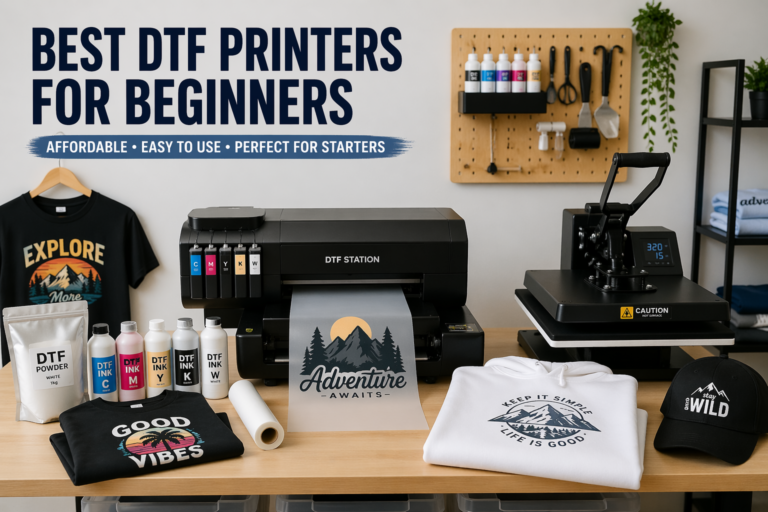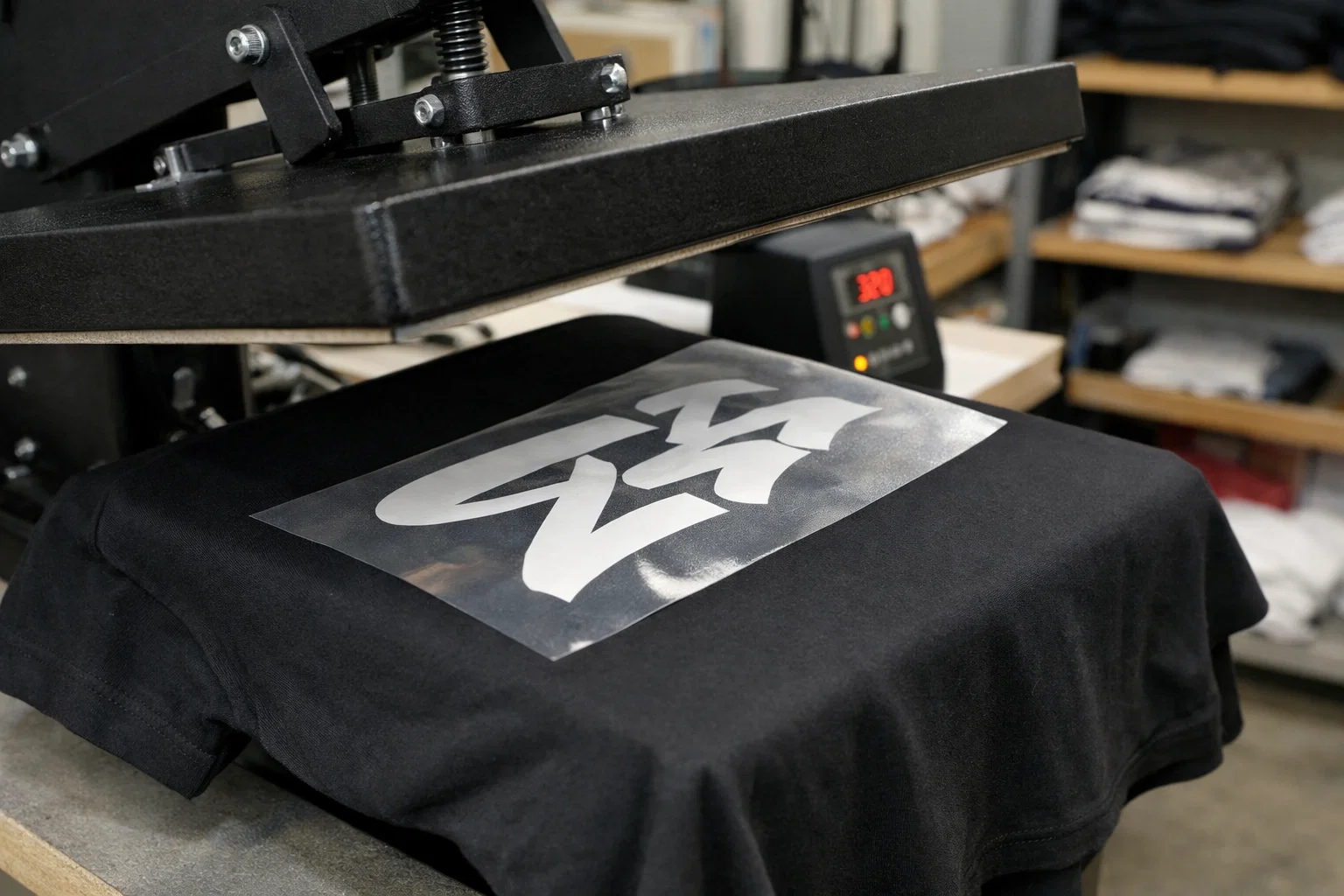
Heat transfer vinyl design applied to a t shirt using a professional heat press.
Heat transfer vinyl, often shortened to HTV, remains one of the most widely used apparel decoration methods in 2026. While newer technologies like DTF printing continue to gain momentum, heat transfer vinyl still plays a critical role in custom apparel, small-scale production, and personalization-focused businesses.
This guide explains what heat transfer vinyl is, how it works, where it performs best, and when it makes sense to choose HTV over other printing methods.
What Is Heat Transfer Vinyl?
Heat transfer vinyl is a thin, flexible material designed to be cut into shapes or designs and applied to fabric using heat and pressure. Unlike ink-based printing methods, HTV sits on top of the fabric rather than bonding through ink absorption.
HTV is commonly used for:
-
Custom t shirts
-
Sports jerseys
-
Team uniforms
-
Personalized apparel
-
Small batch merchandise
The vinyl comes in sheets or rolls and is available in a wide range of colors, finishes, and textures.
How Heat Transfer Vinyl Works
The HTV process follows a simple but precise workflow.
Design Preparation
Designs are created in vector-based software such as Adobe Illustrator, CorelDRAW, or cutting software provided by vinyl cutter manufacturers.
The design must be mirrored before cutting so it appears correctly once transferred to the garment.
Cutting the Vinyl
A vinyl cutting machine cuts the design from the vinyl sheet. Only the vinyl layer is cut, not the backing.
After cutting, excess vinyl is removed in a process called weeding, leaving only the desired design on the carrier sheet.
Heat Press Application
The weeded design is placed onto the garment with the carrier sheet facing up. A heat press applies:
-
Controlled temperature
-
Even pressure
-
Precise time
Once pressed, the carrier sheet is peeled away, leaving the vinyl bonded to the fabric surface.
Types of Heat Transfer Vinyl
Heat transfer vinyl is not a single product category. Different types serve different purposes.
Standard HTV
The most common vinyl used for simple designs, logos, and text. It offers solid color coverage and consistent results.
Stretch HTV
Designed for performance wear and fabrics with elasticity, such as athletic apparel and activewear.
Glitter and Specialty HTV
Includes glitter, metallic, holographic, reflective, puff, and textured vinyl. These materials are popular for fashion-focused designs and branding accents.
Printable HTV
Allows full-color designs to be printed onto vinyl using inkjet or eco-solvent printers before cutting and pressing.
Fabrics Compatible With Heat Transfer Vinyl
HTV works best on:
-
Cotton
-
Cotton-poly blends
-
Polyester (with correct temperature settings)
Challenges may arise with:
-
Heat-sensitive fabrics
-
Treated or coated textiles
-
Sublimated polyester garments
Fabric testing is essential to avoid dye migration, scorching, or vinyl adhesion failure.
Advantages of Heat Transfer Vinyl
Low Equipment Cost
HTV requires minimal startup investment:
-
Vinyl cutter
-
Heat press
-
Design software
This makes it ideal for beginners and home-based businesses.
Clean and Controlled Process
No inks, no screens, and no drying systems. HTV production environments remain clean and manageable.
Strong Visual Impact
Specialty vinyl options allow for textures and finishes that are difficult to replicate with ink-based printing.
Ideal for Personalization
Names, numbers, and custom text can be produced quickly without additional setup.
Limitations of Heat Transfer Vinyl
Not Ideal for Large Production Runs
Manual cutting, weeding, and pressing make HTV inefficient for high-volume orders.
Limited Design Complexity
Highly detailed or photographic designs are difficult to achieve using traditional vinyl cutting.
Surface Feel
HTV sits on top of the fabric, which some customers perceive as heavier compared to ink-based prints.
Heat Transfer Vinyl vs Other Printing Methods
HTV vs Screen Printing
Screen printing is more efficient for bulk orders and long production runs. HTV excels in small batches and customization.
HTV vs DTF Printing
DTF printing offers:
-
Full-color designs
-
Faster scaling
-
Better handling of complex artwork
HTV remains competitive for:
-
Simple logos
-
Names and numbers
-
Specialty finishes
Many modern print shops use both HTV and DTF depending on order requirements.
When Should You Use Heat Transfer Vinyl?
Heat transfer vinyl is the right choice when:
-
Producing small quantities
-
Offering personalized apparel
-
Working with simple designs
-
Operating with limited space or budget
-
Creating specialty texture effects
It is less suitable when:
-
Printing large volumes
-
Producing photo-realistic designs
-
Running high-speed commercial operations
Is Heat Transfer Vinyl Still Relevant in 2026?
Despite rapid growth in DTF and digital printing, heat transfer vinyl remains relevant due to its accessibility, versatility, and low barrier to entry.
For small businesses, startups, schools, sports teams, and custom apparel creators, HTV continues to provide a reliable and profitable solution.
Final Thoughts
Heat transfer vinyl is not outdated. It simply serves a different purpose in today’s apparel printing landscape.
Understanding when to use HTV and when to switch to alternatives like DTF or screen printing allows businesses to operate more efficiently, meet customer expectations, and scale intelligently.
For many print shops in 2026, HTV remains a valuable tool rather than a replacement technology.
About the Author