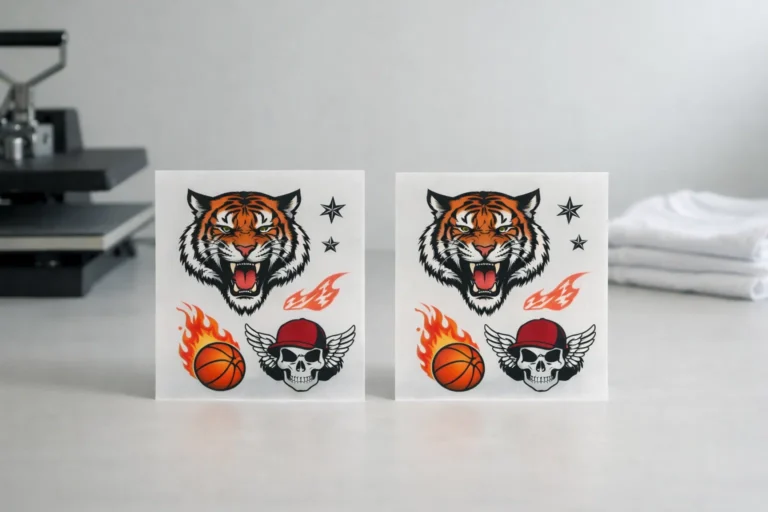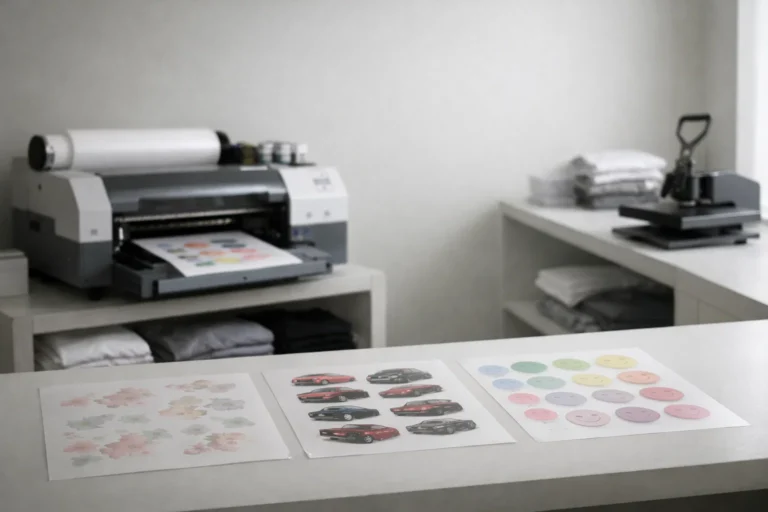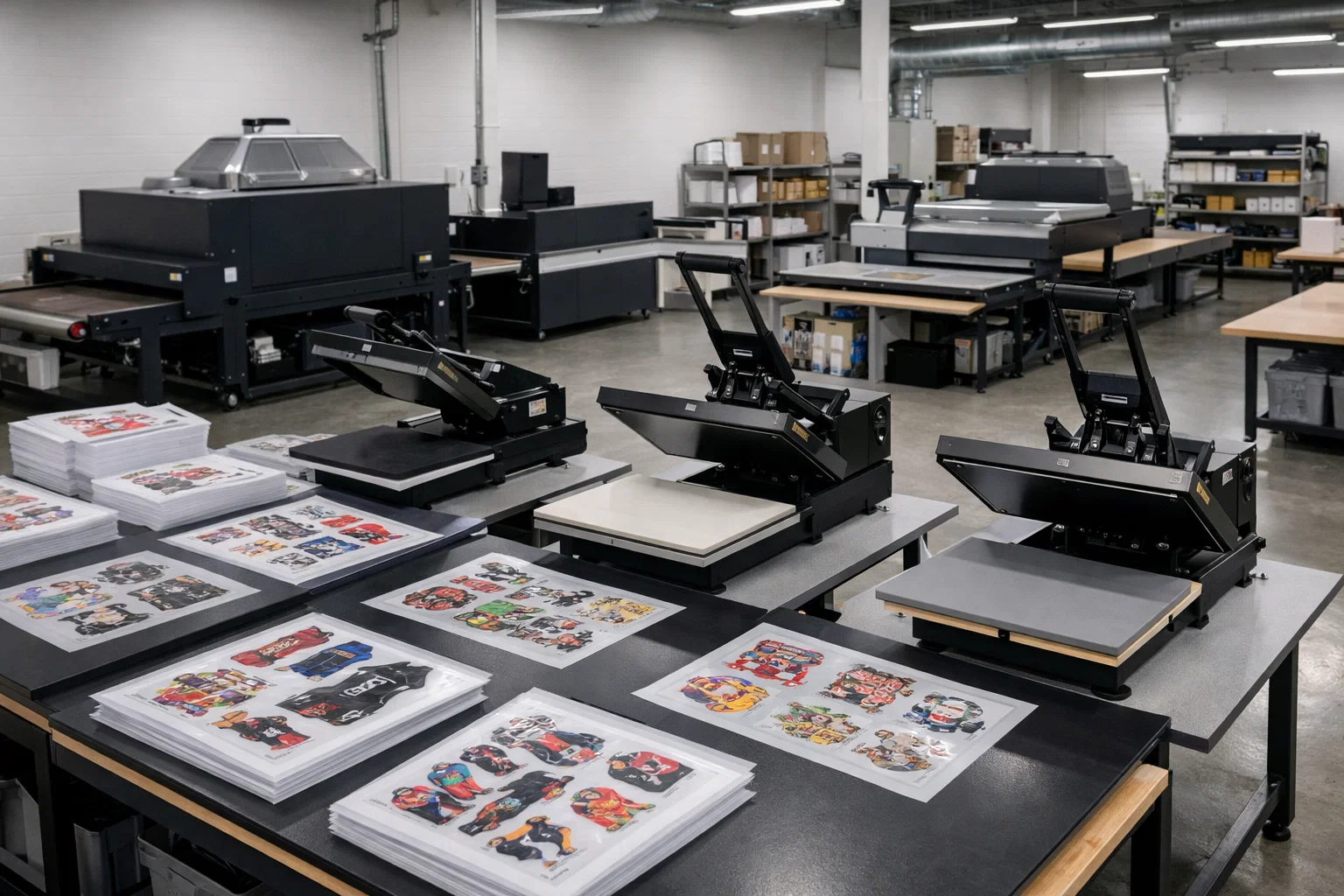
DTF heat transfer workflows support scalable, on-demand apparel production.
Across global print markets, apparel print shops are expanding their Direct to Film heat transfer capacity as on-demand production continues to reshape the custom apparel industry. What was once treated as a supplemental workflow is increasingly becoming a core part of modern print operations.
As brands move away from bulk inventory and toward shorter production cycles, print service providers are adapting their equipment, workflows, and production planning to support faster turnaround and greater flexibility.
On-Demand Production Drives Workflow Changes
The shift toward on-demand apparel production has placed new pressures on print shops of all sizes. Brands now expect shorter lead times, smaller order quantities, and consistent output across repeat runs.
To meet these expectations, many operators are increasing their reliance on heat-applied transfer workflows that allow designs to be produced in advance and applied as orders are confirmed. This approach reduces inventory risk while enabling faster fulfillment during peak demand periods.
Industry observers note that these changes reflect broader shifts in how apparel is produced, sold, and distributed.
DTF Heat Transfer Moves Into the Core Production Stack
Direct to Film heat transfer has gained attention for its ability to work across multiple fabric types without complex setup changes. Unlike some traditional methods, this approach allows print shops to maintain a single workflow while handling cotton, polyester, blends, and dark garments.
As demand grows, many shops are moving beyond entry-level setups and investing in more consistent production systems. Automated curing, improved material handling, and standardized transfer workflows are becoming more common as operators seek to reduce variability and increase output.
This transition signals a move from experimentation toward long-term adoption.
Equipment Investment Reflects Market Maturity
As production volume increases, print shops are reassessing where manual processes create bottlenecks. Curing, powder application, and transfer preparation remain among the most time-sensitive stages of production.
To address these challenges, operators are increasingly prioritizing equipment upgrades that support consistent results at scale. Conveyor curing systems and integrated workflows are often viewed as necessary steps for businesses handling repeat orders and fulfillment contracts.
Rather than chasing maximum speed, many shops focus on reliability and predictability as they scale.
Hybrid Production Environments Become the Norm
Despite the growing role of heat transfer workflows, most print shops continue to operate hybrid production environments. Screen printing, sublimation, DTG, and transfer-based methods are often used side by side depending on order type and material requirements.
This hybrid approach allows businesses to remain flexible while optimizing each workflow for its strengths. Heat transfer methods are frequently used for short runs and rapid fulfillment, while other techniques support specific product categories.
The result is a more adaptable production model aligned with modern demand patterns.
Global Accessibility Supports Continued Adoption
Another factor supporting the expansion of transfer-based workflows is improved global accessibility. Equipment availability and consumable supply chains have expanded, allowing businesses in different regions to adopt similar production standards.
As technology becomes more accessible, adoption continues beyond early-adopter markets. This global spread reinforces the role of heat transfer workflows as a practical solution rather than a niche alternative.
Industry Outlook: Flexibility Remains the Key Advantage
Looking ahead, industry participants expect flexibility to remain a defining factor in apparel printing. As customization, rapid fulfillment, and localized production continue to shape demand, workflows that support these needs are likely to see continued investment.
Rather than replacing existing methods, transfer-based production is increasingly integrated into broader production strategies. Its ability to balance speed, consistency, and material versatility positions it well for ongoing relevance.
Final Thoughts
The expansion of Direct to Film heat transfer capacity reflects a broader transformation within the apparel printing industry. As on-demand production becomes the standard rather than the exception, print shops are adapting their workflows to remain competitive.
For many businesses, the focus is no longer on whether to adopt transfer-based workflows, but how to scale them efficiently and reliably.
About the Author