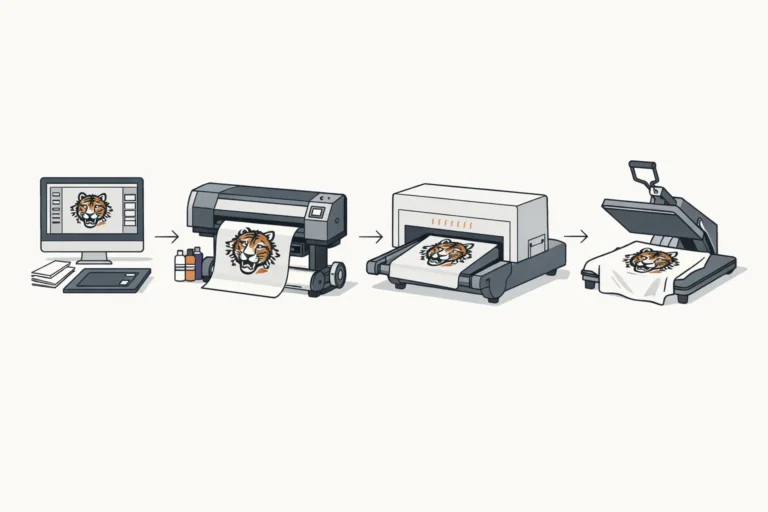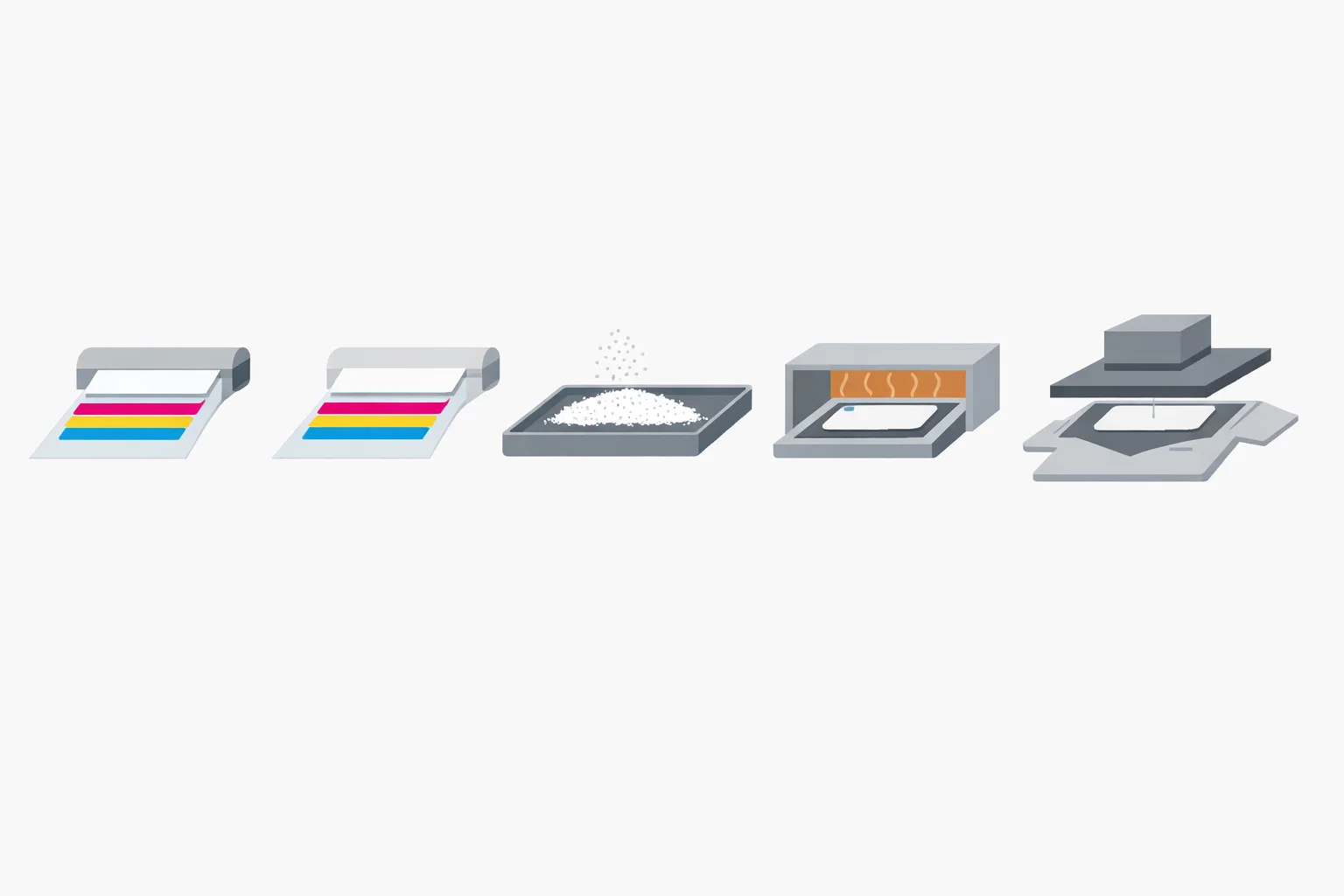
Overview of the direct-to-film printing process from film preparation to heat transfer.
Direct-to-film (DTF) printing is a digital heat transfer process used in textile decoration. Unlike direct-to-garment or screen printing methods, DTF separates image printing from garment application by first producing a transferable film that can be stored and applied later. The process consists of several distinct technical stages involving film media, ink layering, adhesive powder, curing, and heat transfer.
Film Media Preparation
DTF printing begins with the use of a polyethylene terephthalate (PET) film designed for heat transfer applications. The film provides a stable, non-absorbent surface that allows ink layers and adhesive material to remain on the surface rather than penetrating the substrate. Prior to printing, the film is typically fed into the printer in roll or sheet form, depending on system configuration.
Ink Layer Sequencing
During the printing stage, the image is mirrored and printed onto the PET film using a CMYK color set. After the color layers are deposited, a white ink layer is applied to create an opaque backing. This white layer serves two technical functions. It improves color visibility on dark or colored garments and provides a bonding surface for the adhesive layer applied later in the process.
Ink deposition is controlled to maintain layer consistency and prevent ink migration during curing. The order of ink layers is a defining characteristic of DTF workflows and distinguishes the process from direct printing methods where ink is applied directly to fabric.
Adhesive Powder Application
While the printed ink layers remain wet, a fine thermoplastic polyurethane (TPU) hot-melt powder is applied to the printed areas of the film. The powder adheres only to the inked regions, forming a uniform adhesive layer. Excess powder is typically removed through vibration or mechanical shaking to ensure even coverage and prevent buildup outside the image area.
The adhesive powder is responsible for bonding the printed image to the textile during the heat transfer stage.
Curing and Fixation
After powder application, the film is exposed to controlled heat to cure the adhesive and stabilize the ink layers. This curing stage melts the TPU powder, allowing it to fuse with the ink without fully activating the adhesive. The result is a dry, cured transfer that can be handled, stacked, or stored without sticking or degradation.
At this stage, the printed transfer is fully formed but not yet bonded to a garment.
Heat Transfer to Garment
The cured film is applied to a textile substrate using a heat press. Heat and pressure activate the adhesive layer, bonding the inked image to the fabric surface. After pressing, the carrier film is peeled away, leaving the transferred design attached to the garment.
Peeling may occur either hot or cold depending on film formulation, but the underlying bonding mechanism remains consistent across DTF systems.
Separation of Printing and Application Stages
A defining technical characteristic of DTF printing is the decoupling of image production from garment application. Once cured, transfer films can be stored and applied at a later time. This separation allows printing and pressing to occur independently, enabling flexible production scheduling and batch processing.
This staged workflow differentiates DTF from direct printing methods, where image creation and garment finishing occur simultaneously.
About the Author