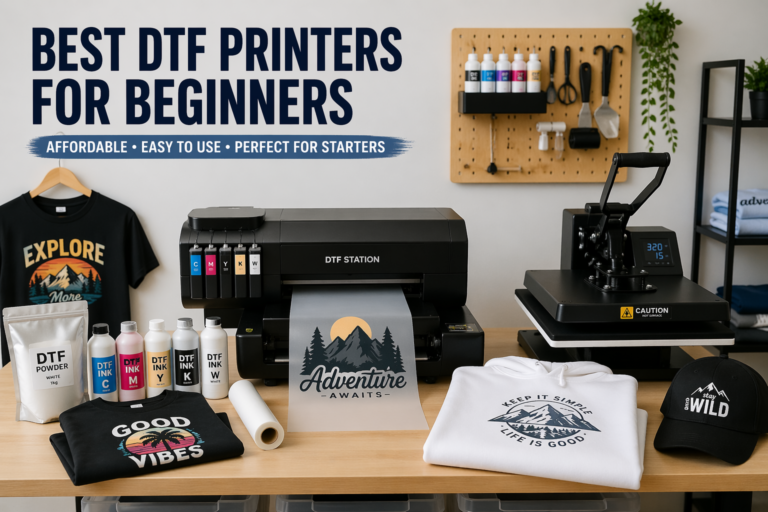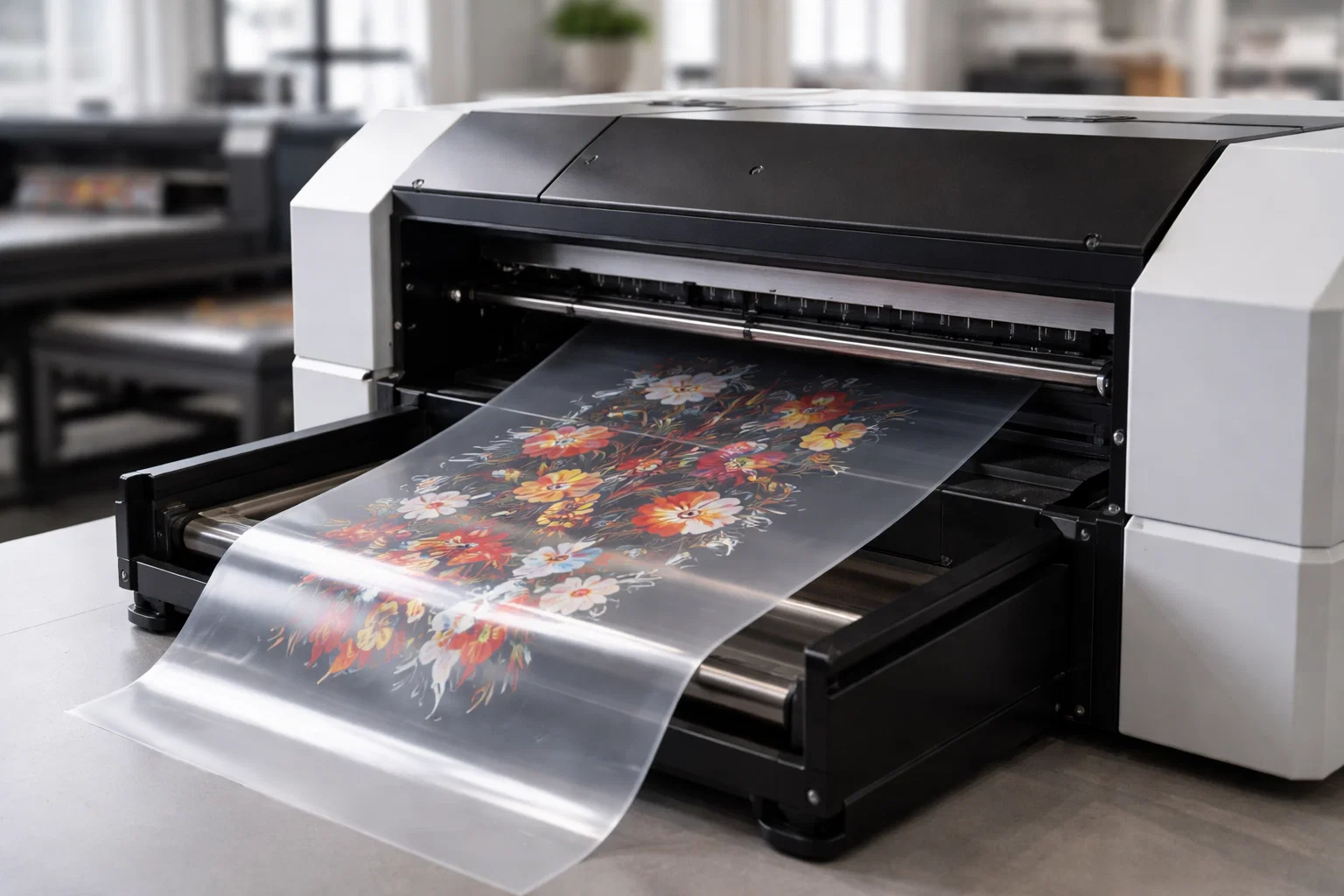
A DTF printer prints designs onto PET film, which are later transferred onto garments using heat and pressure.
A DTF printer is often described as a machine that prints designs onto film for heat transfer. While that definition is technically correct, it does not fully explain how DTF printing actually works in real production environments.
In practice, a DTF printer is part of a multi-step workflow that combines printing, adhesive application, curing, and heat pressing. Understanding this process is critical for anyone considering DTF for commercial or on-demand apparel production.
What Is a DTF Printer?
A DTF printer, short for Direct to Film printer, is a digital printing machine designed to print graphics onto a special PET film instead of directly onto fabric.
The printed film is later transferred onto garments using heat and pressure. This indirect process allows DTF printing to work on a wide range of fabrics, including cotton, polyester, blends, and darker materials where other methods struggle.
Unlike screen printing or direct-to-garment printing, a DTF printer does not require pretreatment of the fabric itself.
What Does a DTF Printer Do?
A DTF printer creates a transferable print rather than a finished garment.
In a typical workflow, the printer lays down:
-
Color ink layers
-
A white ink layer for opacity
-
A mirrored image onto coated PET film
Once printed, adhesive powder is applied to the wet ink surface. After curing, the film becomes a heat-transfer medium that can be pressed onto apparel when needed.
This separation between printing and pressing is one of the main reasons DTF has gained popularity in on-demand production.
How a DTF Printer Works Step by Step
In real production, a DTF printer operates as part of a sequence rather than a standalone machine.
First, artwork is printed onto PET film using CMYK and white ink layers. The white layer sits beneath the colors to maintain vibrancy on dark garments.
Next, adhesive powder is evenly applied to the printed design. This powder bonds the ink to the fabric during heat pressing.
The printed film then goes through a curing stage, where heat melts the adhesive powder without fully activating it.
Finally, the cured transfer is heat pressed onto the garment. After pressing, the film is peeled away, leaving the ink and adhesive bonded to the fabric.
What a DTF Printer Is Good At
DTF printers perform well in situations where flexibility matters more than raw speed.
They are commonly used for:
-
Short-run and on-demand apparel
-
Multi-color designs without setup costs
-
Printing on mixed fabric types
-
Producing transfers in advance for later application
For small shops and online sellers, this flexibility often outweighs the slower production speed compared to traditional screen printing.
Where DTF Printers Struggle in Real Production
Despite its advantages, a DTF printer is not without limitations.
As production volume increases, shops often encounter issues such as:
-
Transfer peeling after washing
-
Inconsistent adhesion between batches
-
Film behavior changing at higher speeds
-
White ink management challenges
Many of these problems do not appear during initial testing. They surface later, especially after garments are washed or when turnaround times become more aggressive.
This is why DTF printers require tighter process control than many beginners expect.
DTF Printer vs Screen Printing vs DTG
Each printing method serves a different production need.
DTF printers excel at versatility and low setup cost but sacrifice speed at scale. Screen printing remains the most efficient option for large, repeat orders. DTG offers soft hand feel but struggles with dark fabrics and pretreatment consistency.
In many modern print shops, DTF does not replace other methods. It complements them.
Who Should Use a DTF Printer and Who Should Not
DTF printers are well suited for:
-
Etsy and on-demand sellers
-
Small to mid-size print shops
-
Businesses offering custom apparel with frequent design changes
They are less ideal for:
-
Extremely high-volume production
-
Shops without process discipline
-
Operations expecting screen-print speed from digital equipment
Understanding these boundaries prevents many common production frustrations.
Final Thoughts
A DTF printer is more than a simple printing machine. It is a system that requires consistency across printing, curing, and pressing stages.
When used correctly, DTF printing offers unmatched flexibility and design freedom. When pushed beyond its limits, it exposes weaknesses that can affect durability and quality.
For shops willing to manage the workflow carefully, a DTF printer can be one of the most versatile tools in modern apparel production.
About the Author