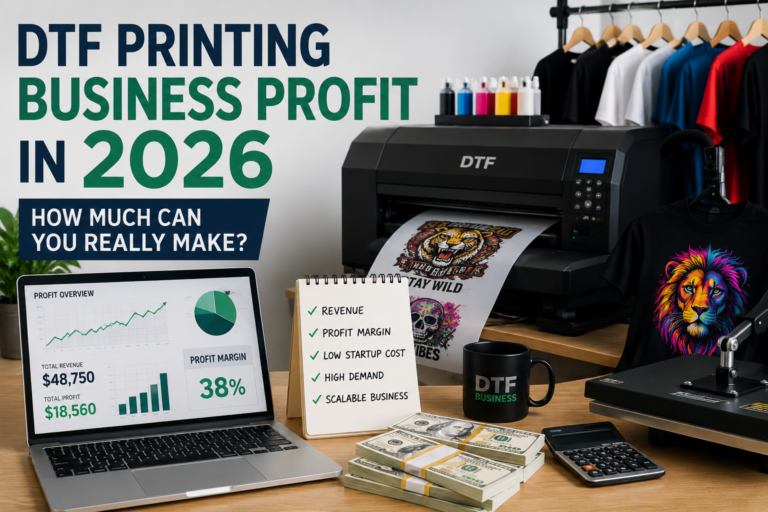
Direct to Film (DTF) printing continues to be one of the fastest-growing segments of the custom apparel industry in 2026. With relatively low startup costs, increasing demand for custom products, and the ability to print on a wide range of fabrics, many entrepreneurs are considering starting a DTF printing business.
One of the most common questions is simple:
How much profit can a DTF printing business actually make?
The answer depends on several factors, including pricing, production efficiency, customer acquisition, equipment costs, and whether you are selling transfers or finished apparel. While some businesses struggle to gain traction, others generate substantial monthly profits and build highly successful operations.
Average DTF Printing Business Profit Margins
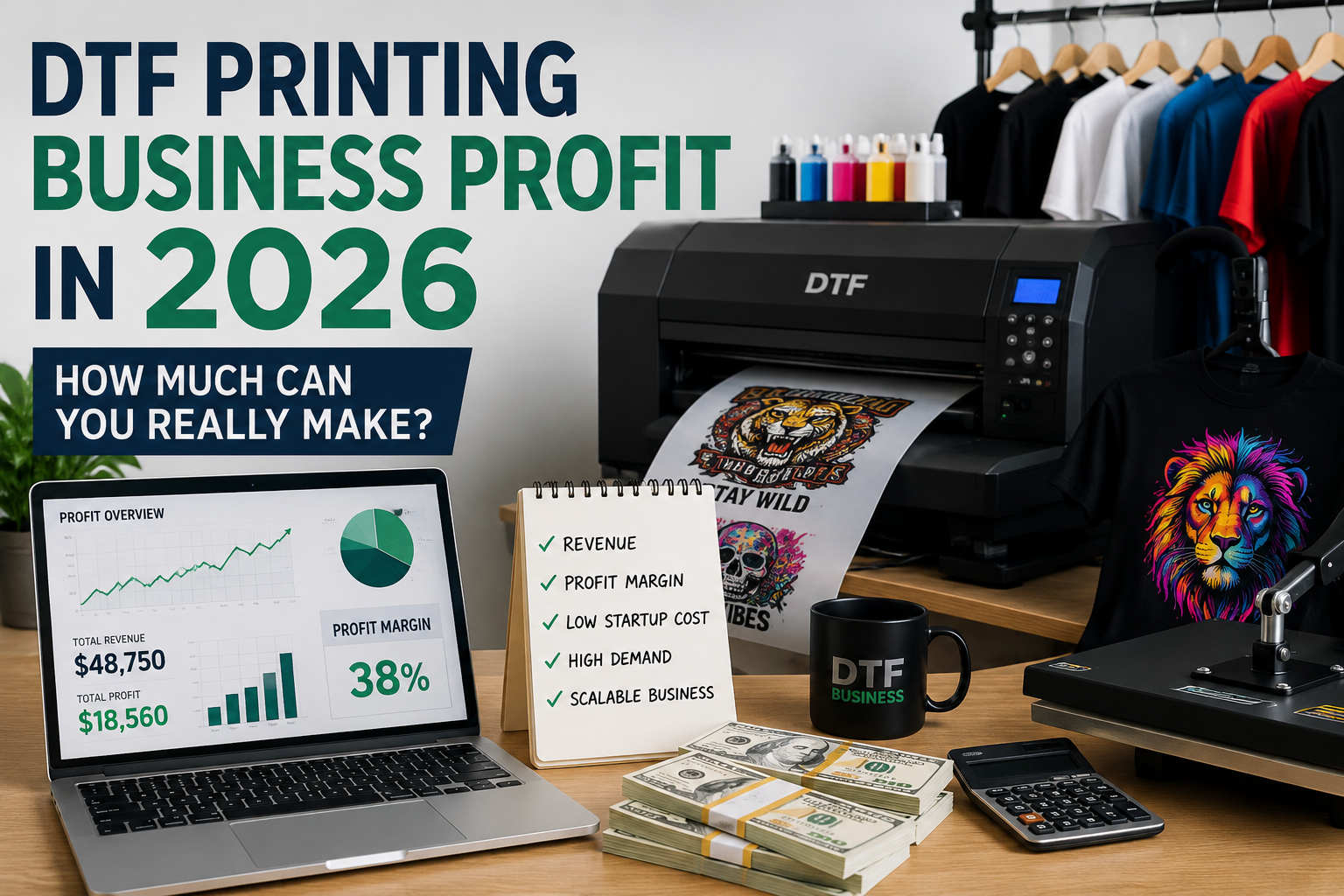
Most profitable DTF printing businesses operate with gross profit margins between 30% and 60%.
Typical ranges include:
| Business Model | Average Gross Margin |
|---|---|
| Budget Transfer Shop | 30% – 45% |
| Mid-Market DTF Shop | 45% – 60% |
| Premium DTF Service | 60% – 75% |
| Apparel Brand Using DTF | 20% – 40% |
Businesses that focus on quality, fast turnaround times, and repeat customers generally achieve higher profit margins than those competing solely on price.
How Much Revenue Can a DTF Business Generate?
Revenue varies significantly depending on location, marketing efforts, and customer demand.
Home-Based DTF Business
A small home-based operation may generate:
- $2,000 – $10,000 per month in revenue
- $1,000 – $5,000 per month in profit
- 20 to 100 orders per month
Growing Local DTF Shop
A growing local business may generate:
- $10,000 – $30,000 per month in revenue
- $4,000 – $15,000 per month in profit
- Consistent repeat customers
Established Commercial Operation
Larger operations can generate:
- $50,000 – $200,000+ per month in revenue
- $15,000 – $50,000+ per month in profit
- Wholesale and high-volume production contracts
What Determines Profitability?
The most successful DTF businesses focus on more than just printing.
Several factors directly impact profitability:
Customer Acquisition
Many new business owners focus heavily on equipment and not enough on finding customers.
A DTF printer alone does not create profit. Customers do.
Businesses that already have access to local schools, sports teams, small businesses, churches, influencers, and apparel brands often grow much faster than businesses that start without a customer base.
Pricing Strategy
Underpricing is one of the biggest mistakes new DTF businesses make.
Many operators attempt to compete by offering the lowest prices in the market. This often leads to shrinking margins and unsustainable growth.
Successful businesses focus on:
- Reliable quality
- Fast turnaround
- Excellent customer service
- Consistent results
These factors allow businesses to charge premium rates.
Production Efficiency
Reducing waste can dramatically improve profitability.
Common areas where profit is lost include:
- Misprints
- Incorrect color profiles
- Excessive ink usage
- Film waste
- Reprints
The more efficient your production process becomes, the more profit you keep from every order.
Example DTF Profit Calculation
Let’s look at a typical order.
22-Inch Gang Sheet
Sale Price: $45
Estimated Costs:
- Film: $7
- Ink: $4
- Powder: $2
- Labor: $5
- Equipment and overhead: $5
Total Cost: $23
Profit: $22
Profit Margin: 49%
This is a common profit range for efficient DTF operations that maintain consistent production quality.
Selling Transfers vs Selling Finished Apparel
Many experienced business owners discover that selling finished apparel is often more profitable than selling transfers alone.
Selling Transfers
Advantages:
- Faster production
- Lower labor requirements
- Easier scaling
Disadvantages:
- High competition
- Price-sensitive customers
- Lower average order value
Selling Finished Products
Advantages:
- Higher profit margins
- Greater customer loyalty
- Stronger branding opportunities
Disadvantages:
- More labor-intensive
- Inventory management
- Additional fulfillment requirements
Businesses that combine both models often achieve the best results.
Startup Costs and Return on Investment
Startup costs vary depending on equipment and production goals.
Entry-Level Setup
- Basic DTF printer
- Heat press
- Computer and software
- Initial supplies
Estimated investment:
$5,000 – $15,000
Professional Setup
- Commercial DTF printer
- Powder shaker and dryer
- Production workspace
- Bulk consumables
Estimated investment:
$20,000 – $75,000+
Many successful businesses recover their initial investment within 6 to 18 months, depending on sales volume and operating efficiency.
Common Reasons DTF Businesses Fail
Not every DTF business becomes profitable.
Common mistakes include:
Buying Equipment Before Finding Customers
Many operators purchase expensive equipment without first validating market demand.
Competing Only on Price
Price wars reduce profit margins and make growth difficult.
Ignoring Maintenance
DTF printers require regular maintenance. Neglecting maintenance often leads to downtime and costly repairs.
Poor Quality Control
Inconsistent prints quickly damage customer trust and reduce repeat business.
Lack of Marketing
Even the best equipment cannot replace consistent marketing and customer outreach.
Is a DTF Printing Business Worth It in 2026?
For many entrepreneurs, the answer is yes.
The demand for custom apparel, branded merchandise, event shirts, and on-demand printing continues to grow. DTF technology remains one of the most accessible ways to enter the apparel decoration industry.
Businesses that focus on customer relationships, operational efficiency, and quality production can build a highly profitable operation.
Final Thoughts
A realistic expectation for a well-managed DTF printing business in 2026 is a gross profit margin between 30% and 60%, with significant growth potential as customer volume increases.
The businesses generating the highest profits are not necessarily the ones with the most expensive equipment. They are the businesses that consistently deliver quality, build strong customer relationships, and operate efficiently.
For entrepreneurs willing to invest in both production and marketing, DTF printing remains one of the most attractive opportunities in the custom apparel industry today.
Frequently Asked Questions
How profitable is a DTF printing business?
A well-managed DTF printing business can achieve profit margins between 30% and 60%, depending on pricing, operating costs, and customer demand.
Can you start a DTF business from home?
Yes. Many entrepreneurs start with a home-based setup and scale into a commercial operation as sales increase.
Is DTF printing still worth it in 2026?
Yes. Demand for custom apparel, branded merchandise, and on-demand printing continues to grow, making DTF one of the most accessible printing businesses to start.
About the Author