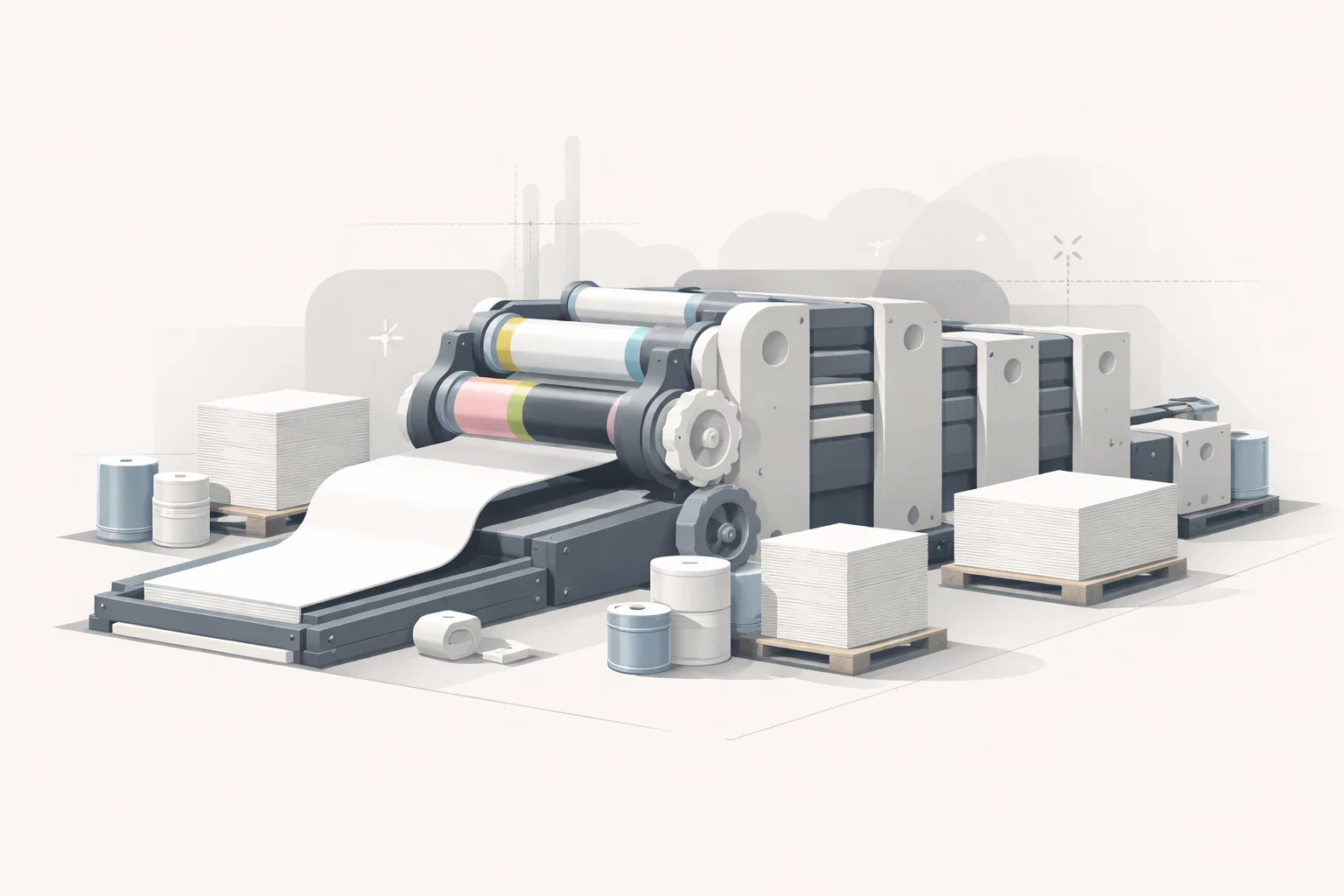
On-demand production models are increasingly shaping print operations across global markets in 2026.
The printing industry is changing faster than many operators expected.
In early 2026, three forces are now shaping most strategic decisions across the sector: consolidation, regulation, and a steady move toward on-demand production.
These shifts are affecting how print businesses invest, price work, and compete.
Consolidation Continues, but Flexibility Suffers
Large print and packaging groups continue to merge. The goal is clear. Reduce costs, secure supply chains, and gain scale.
In practice, consolidation delivers purchasing power and standardized output. It also creates friction. Bigger organizations tend to favor long runs, fixed workflows, and predictable volumes.
Short runs and fast-turn jobs are harder to accommodate. Decision-making slows. Production becomes less responsive.
This gap is becoming more visible across commercial print and packaging.
Regulation Is Now Part of Daily Operations
Environmental regulation is no longer theoretical. For many print businesses, it is now a daily operational issue.
Printers are facing tighter requirements around materials, waste handling, and reporting. In packaging-related work, responsibility is increasingly moving upstream, directly impacting print providers.
Compliance is no longer handled once a year. It affects workflow design, supplier selection, and customer relationships.
Shops with manual or fragmented processes are feeling the pressure first.
On-Demand Print Moves Beyond the Margins
At the same time, demand patterns are shifting.
Brands are producing less inventory. Marketing cycles are shorter. Personalization is becoming routine. E-commerce continues to push faster turnaround expectations.
As a result, on-demand print is no longer a side capability. For many buyers, it is now the preferred production model.
Smaller runs. More versions. Faster delivery.
Output volume matters less than speed and reliability.
Smaller Shops Find Room to Compete
The combination of consolidation and regulation is changing where opportunity sits.
Large operators continue to dominate high-volume work. That has not changed. What is changing is where margin growth is coming from.
Smaller and mid-sized print businesses built around job switching, automation, and quick turnaround are capturing work that larger players struggle to handle efficiently.
This is not a shift away from scale. It is a split in the market.
Technology Makes the Model Work
On-demand production would not scale without automation.
Digital job management, automated scheduling, and online order intake have reduced the cost and complexity of short runs. These tools are now common, not experimental.
As software improves, flexibility becomes easier to deliver consistently.
That changes how print capacity is valued.
What This Signals for 2026
Printing industry news in 2026 points to a reset rather than a slowdown.
Consolidation is concentrating volume. Regulation is raising the bar for participation. On-demand production is reshaping expectations on both sides of the market.
Print businesses that can adapt operations quickly are better positioned to compete.
Those that cannot may find scale alone is no longer enough.
Looking Ahead
The industry is unlikely to reverse course this year.
Operators that balance compliance, flexibility, and efficiency are expected to gain ground as demand continues to fragment.
In 2026, the direction of the printing industry is being set less by size and more by how well businesses respond to change.
About the Author