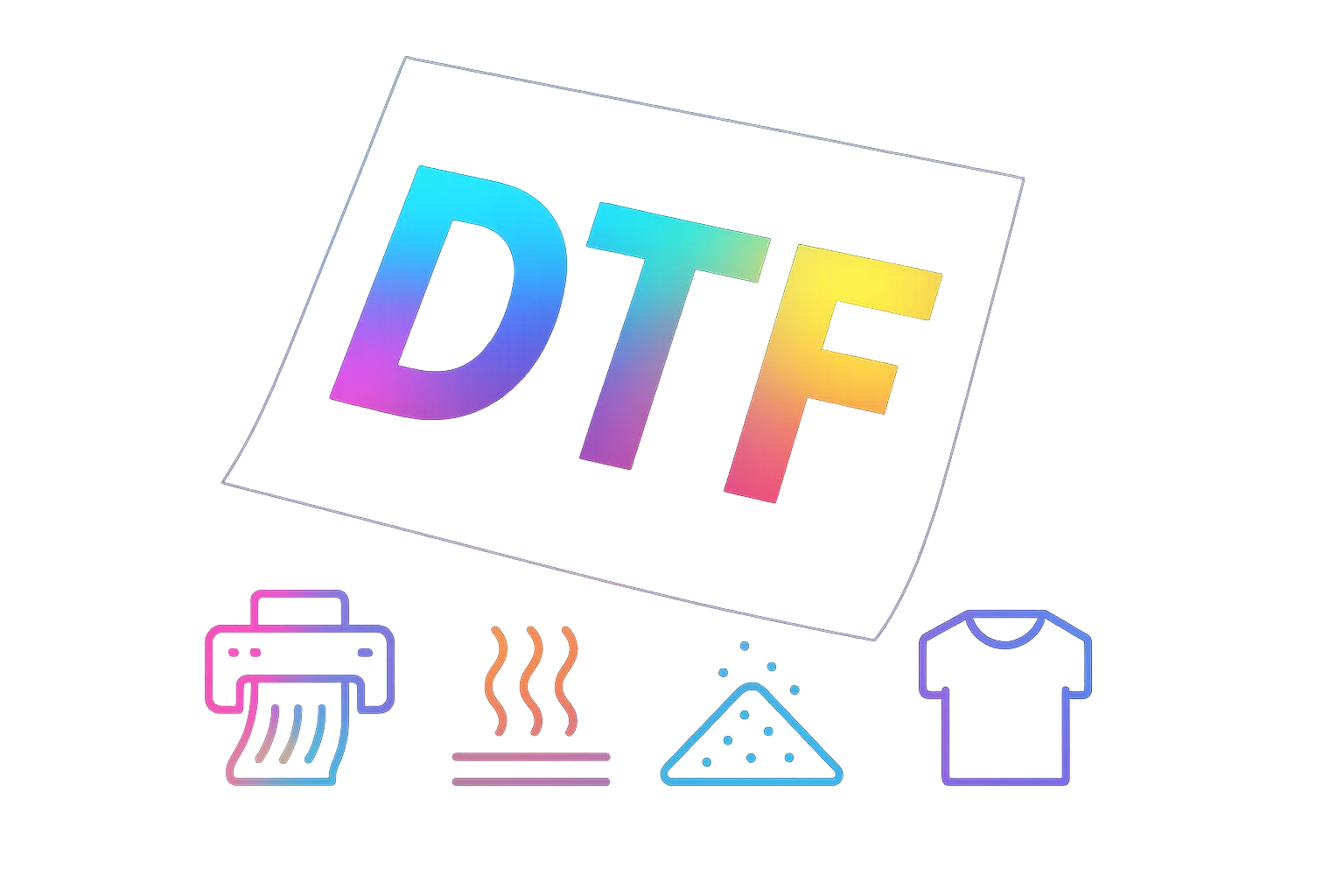
A creative conceptual illustration showing what DTF means in printing through colorful film graphics and process icons.
DTF meaning in printing refers to Direct to Film, a modern apparel printing method that transfers full color designs onto fabric using a printed film, adhesive powder, and heat pressing. The term DTF has become one of the most frequently searched phrases in the apparel decoration industry, yet many beginners still ask the same question: what does DTF mean in printing?
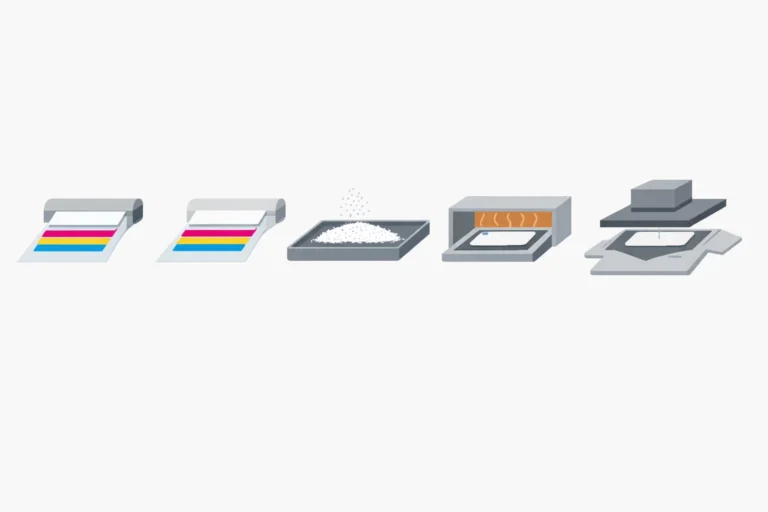
DTF stands for Direct to Film, a technology that prints designs onto a special PET film rather than directly onto fabric. Once printed, the design is coated with adhesive powder, cured with heat, and then transferred onto garments using a heat press. This process has grown rapidly in popularity because it delivers vibrant colors, strong durability, and compatibility with almost every fabric type.
Whether you run a print shop, design custom apparel, or are exploring new printing methods, understanding what DTF means in printing is essential. This guide explains the meaning of DTF, how the process works, how it compares to other printing methods, and why the industry continues shifting toward this technology.
What Does DTF Mean in Printing?
DTF means Direct to Film printing.
In simple terms, it is a process where a design is printed onto a PET film, coated with adhesive powder, cured, and then transferred onto fabric using a heat press.
Unlike DTG printing, which prints directly onto a shirt, DTF prints onto a film sheet first. This workflow gives DTF its flexibility and makes it one of the most beginner friendly printing methods available today.
How the DTF Printing Process Works
To fully understand what DTF means in printing, it helps to look at the process step by step.
1. Design Creation
Artwork is created using software such as Photoshop, Illustrator, or Affinity.
2. Printing on PET Film
A DTF printer applies CMYK and white ink layers onto PET film.
The white ink layer ensures color vibrancy on both light and dark garments.
3. Applying the Adhesive Powder
Hot melt adhesive powder is applied to the wet ink.
This powder forms the bond between the design and the fabric.
4. Curing
The film is heated to activate the adhesive, either with a curing oven or heat press hover method.
5. Heat Press Transfer
The cured film is pressed onto the garment using:
-
Temperature: 300–320°F
-
Time: 10–15 seconds
-
Pressure: Medium to firm
6. Peel
Depending on the film type, the transfer is peeled hot or cold.
7. Final Press
A second press improves durability and wash resistance.
This consistent workflow is one reason DTF continues replacing older printing methods.
Why DTF Is Becoming the Fastest Growing Printing Method
Now that you understand the DTF meaning in printing, it becomes clear why adoption is accelerating.
1. Works on Almost Any Fabric
DTF adheres to cotton, polyester, blends, nylon, spandex, denim, and more.
2. Highly Durable Results
DTF prints offer strong elasticity, excellent wash resistance, and long lasting color.
3. Vibrant Colors and Fine Detail
Gradients, small text, and high resolution artwork transfer cleanly.
4. No Pretreatment Required
Unlike DTG, DTF does not require garment pretreatment.
5. Beginner Friendly
DTF is easier to learn than most traditional print methods.
6. Scales for Any Order Size
DTF supports one off prints, bulk production, gang sheets, and print on demand workflows.
DTF vs Other Printing Methods
Understanding what DTF means in printing also involves comparing it to other techniques.
DTF vs DTG
DTG prints directly on fabric.
DTF prints on film first and works on more fabric types without pretreatment.
DTF vs Screen Printing
Screen printing is ideal for large runs.
DTF excels at small batches and full color designs with no setup cost.
DTF vs Vinyl
Vinyl is limited to solid colors.
DTF supports photo quality images and complex artwork.
DTF vs Sublimation
Sublimation only works on polyester and light colors.
DTF works on nearly all fabrics, including dark garments.
DTF does not replace every method, but it offers unmatched flexibility for most printing businesses.
Common Questions About the Meaning of DTF in Printing
Is DTF the same as DTG?
No. DTG prints directly on the shirt, while DTF uses a film transfer.
Is DTF printing durable?
Yes. High quality DTF transfers last through many washes with excellent stretch resistance.
Can beginners use DTF printers?
Yes. DTF is one of the easiest printing technologies to learn.
Do you need pretreatment for DTF?
No pretreatment is required.
Is DTF good for dark fabrics?
Yes. DTF produces vibrant results on both dark and light garments.
Why Understanding What DTF Means Matters
As interest in DTF printing grows, the term itself has become an entry point into the apparel printing industry. Knowing what DTF means helps beginners choose the right equipment, designers select suitable print methods, and businesses evaluate workflow efficiency and durability.
Understanding the meaning of DTF is the first step toward using it effectively.
Final Thoughts
So, what does DTF mean in printing?
DTF stands for Direct to Film, a versatile and durable printing method that transfers full color designs onto fabric using printed film and heat pressing. Its flexibility, fabric compatibility, and ease of use have made it one of the most widely adopted technologies in modern apparel decoration.
Whether you are starting a print shop or upgrading your production workflow, DTF offers strong long term performance and broad creative possibilities.
About the Author