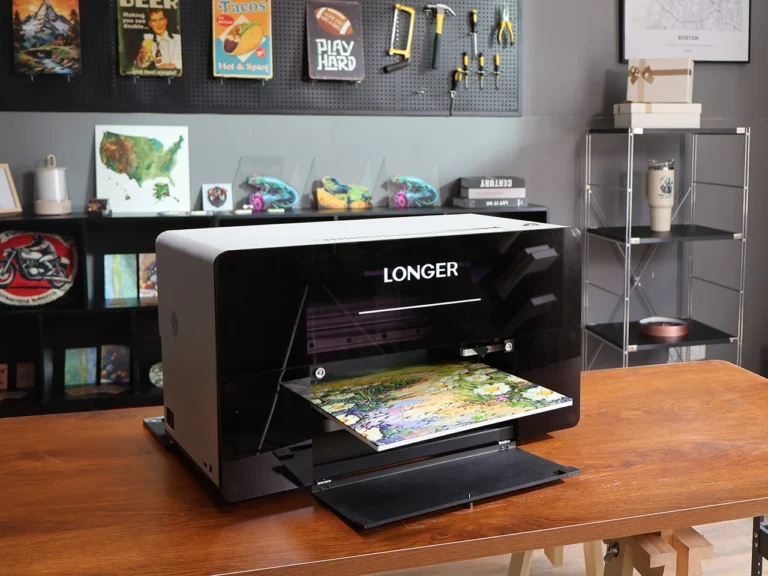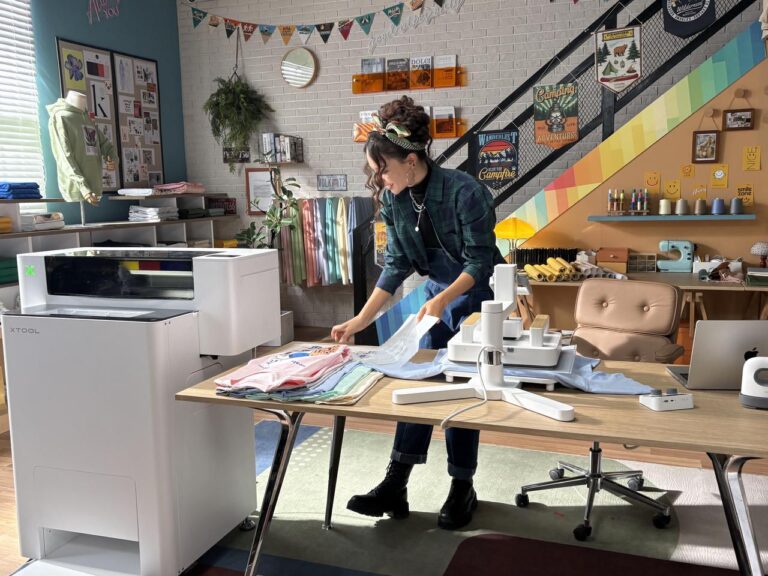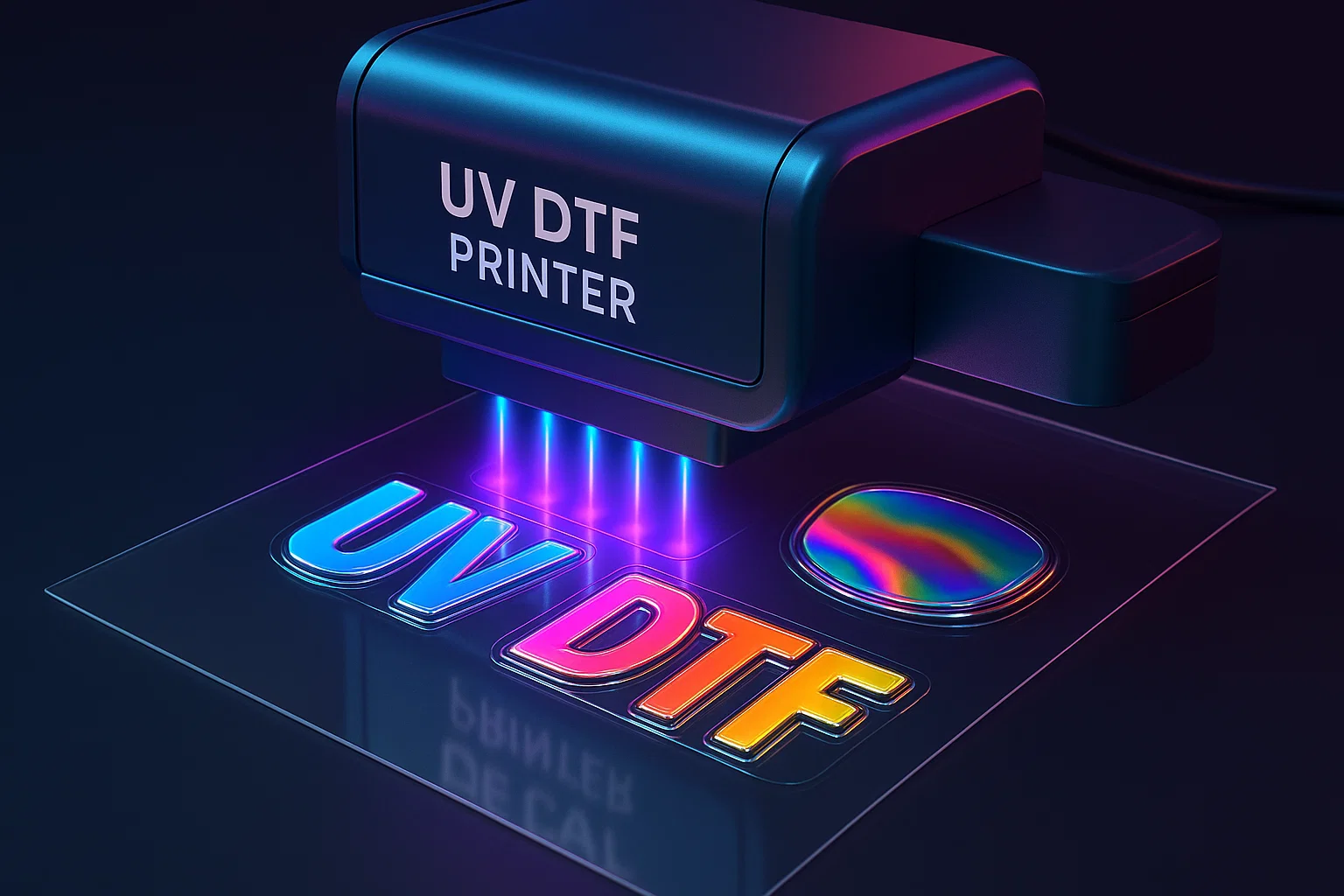
UV DTF printer producing high quality Direct to Film decals.
UV DTF printing has quickly become one of the most talked about technologies in the personalization, promotional product, and custom graphics industry. As search interest rises, many people are asking the same question. What is a UV DTF printer, and why is this method suddenly everywhere?
Simply put, a UV DTF printer is a machine that uses ultraviolet curing technology to print designs onto a special film which can then be applied to almost any hard surface. Unlike traditional DTF printing, which focuses on apparel and soft fabrics, UV DTF is used to create peel and stick decals for items such as tumblers, stainless steel cups, laptops, phone cases, glass, ceramics, wood, acrylic, and more. The result is a vibrant, glossy, durable sticker like transfer that requires no heat press, no weeding, and no complicated setup.
This guide provides a complete explanation of UV Direct to Film technology, how the printers work, what materials they use, why the method is trending, and whether it is a good investment for your business.
What Is a UV DTF Printer
A UV DTF printer is a digital printing device that uses ultraviolet LEDs to cure specially formulated inks on a PET film sheet. The printed design is then combined with a cold adhesive layer, creating a peelable decal that can be applied to almost any rigid surface. The finished product adheres instantly and does not require heat pressing, laminating, or drying.
The UV curing process allows the ink to harden the moment it is printed, producing sharply detailed graphics with raised gloss texture and extremely high definition. This makes UV DTF printers ideal for branding objects, creating personalized gifts, and producing commercial grade labels or stickers.
In simple terms, UV DTF is a modern printing method that produces premium quality decals with minimal labor.
How UV DTF Printing Works Step by Step
Even though the process looks complex at first glance, UV DTF is surprisingly straightforward. Here is how it works from start to finish.
1. Artwork Preparation
The design is created using a vector or high resolution image. Most users work with software like Illustrator, CorelDRAW, Affinity Designer, or simple PNG uploads.
2. Printing on PET Film
The printer lays down three layers in precise order.
Layer A: CMYK color
Layer B: White ink for opacity
Layer C: Gloss varnish for texture
These layers are cured instantly by UV LED lamps.
3. Laminating the Adhesive Film
After printing, an adhesive film known as Film B is pressed onto the printed design. This film carries the cold adhesive that makes UV DTF transfers stick to surfaces.
4. Peeling
Film B is peeled away, leaving the adhesive bonded to the printed graphic.
5. Application
The decal is placed onto the surface, pressed firmly, and the carrier film is removed. The transfer sticks immediately, creating a durable and glossy label.
The entire process requires no heat, no drying time, and no complex equipment beyond the printer and film sheets.
Why UV DTF Printers Are Becoming Popular
Search interest in UV DTF printers has exploded because the method solves major pain points in the promotional printing industry. Here are the main reasons everyone is talking about it.
1. Works on Almost Any Hard Surface
This is the biggest advantage. UV DTF stickers adhere to materials such as:
-
Glass
-
Metal
-
Ceramic
-
Plastic
-
Acrylic
-
Wood
-
Leather
-
Powder coated items
This allows businesses to decorate products they could not customize using traditional vinyl or sublimation.
2. No Heat Press Required
Unlike sublimation or traditional DTF printing, UV DTF transfers apply with simple pressure. This lowers startup cost and simplifies production.
3. Extremely Durable and Scratch Resistant
Because the ink is UV cured, the resulting sticker is rigid, thick, and long lasting. It resists moisture, UV light, scratching, and general wear.
4. Raised Gloss Texture
The varnish layer gives UV DTF graphics a premium embossed look. This makes them ideal for branding luxury items and promotional goods.
5. No Weeding or Lamination
Vinyl cutting requires weeding. Stickers need lamination.
UV DTF eliminates both steps, saving time and labor.
6. Perfect for Small and Large Production Runs
The process is fast and repeatable, making it suitable for both custom one offs and bulk orders.
UV DTF vs Traditional DTF Printing
Although the names are similar, these two printing methods serve different markets.
Purpose
-
Traditional DTF is for fabrics like shirts and hoodies.
-
UV DTF is for hard surfaces like tumblers and cases.
Adhesion Method
-
Traditional DTF uses heat activated adhesive powder.
-
UV DTF uses a pressure based cold adhesive layer.
Ink Type
-
DTF uses water based pigment ink.
-
UV DTF uses UV curing resin ink.
Look and Feel
-
DTF gives a soft, flexible finish on garments.
-
UV DTF produces a glossy, raised texture for decals.
Durability
Both are durable in their own environments, but UV DTF is especially resistant to scratching.
Both technologies are valuable, but they serve different industries. As a result, many print shops now offer both services.
What Can You Make With a UV DTF Printer
UV Direct to Film printers unlock dozens of profitable product opportunities. Some of the most popular applications include:
-
Custom tumbler decals
-
Branded water bottles
-
Business logo stickers
-
Phone case decorations
-
Laptop and tablet decals
-
Glassware designs
-
Keychain inserts
-
Cosmetic container labels
-
Acrylic signage
-
Jar and product labels
Because UV DTF transfers stick so well, businesses can personalize items that previously required vinyl, laser engraving, or screen printing.
Is a UV DTF Printer a Good Investment
For many entrepreneurs, the answer is yes. UV DTF has low labor needs, fast turnaround times, and excellent margins. A single sheet of UV DTF transfers can yield dozens of sellable decals.
You do not need a heat press.
You do not need advanced software.
You do not need high technical skills.
If your business sells decorated tumblers, branded merchandise, corporate gifts, or personalized items, UV DTF can significantly expand your product catalog.
Challenges and Limitations
No technology is perfect. Here are the main limitations to consider.
-
UV ink is more rigid, so it is not suitable for fabrics
-
Glossy finishes are not ideal for every style of design
-
Adhesive quality varies depending on film supplier
-
UV printers require maintenance and proper ventilation
Even with these considerations, UV DTF remains one of the fastest growing print technologies in the world.
Final Thoughts
A UV DTF printer is a powerful tool for producing high quality peel and stick decals that adhere to virtually any hard surface. The process uses UV curing and a cold adhesive layer to create glossy, durable graphics with professional results. With the ability to customize products such as tumblers, cases, glassware, metal items, and promotional merchandise, UV Direct to Film technology has quickly become a favorite among print shops and creators.
As search interest continues to rise, understanding how UV DTF printing works can help you decide whether this method fits your business. If you are looking for versatility, speed, and premium output, UV DTF is one of the strongest printing technologies available today.
About the Author