Correct temperature and press time are essential for durable DTF transfers.
Getting DTF transfer temperature and time right is one of the most important factors in successful Direct to Film printing. In 2026, as DTF continues to dominate custom apparel production for small shops, Etsy sellers, and print studios, heat press accuracy has become a defining quality control step rather than a minor detail.
Incorrect temperature or press time can lead to peeling, cracking, poor wash durability, or inconsistent results across garments. This guide explains the correct DTF transfer temperature and time settings, why they matter, and how professionals achieve consistent results across different fabrics.
Quick Answer: Standard DTF Transfer Settings (2026)
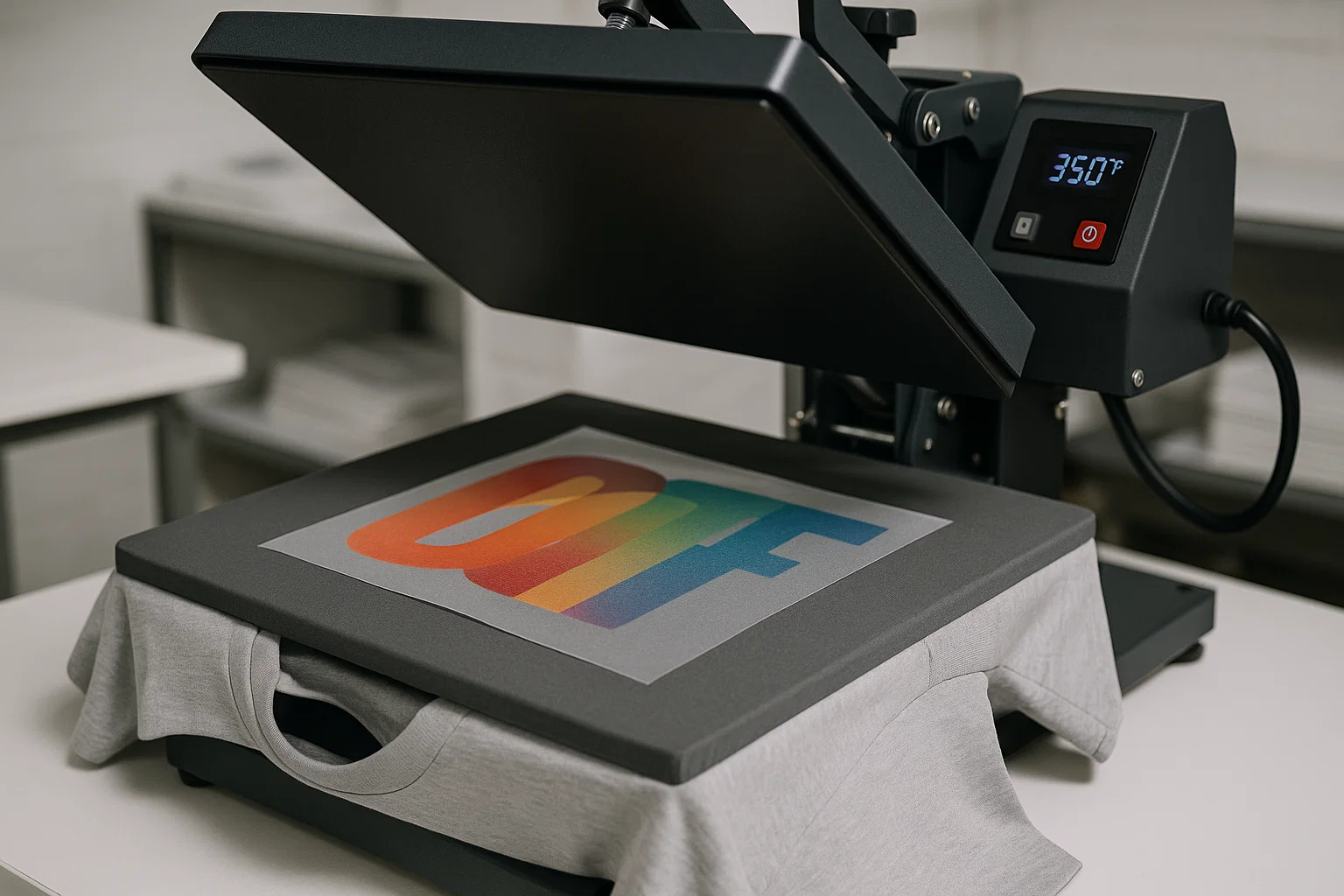
For most standard DTF transfers in 2026, professional heat press settings fall within the following range:
-
Temperature: 300–320°F (150–160°C)
-
Time: 10–15 seconds
-
Pressure: Medium to firm
-
Peel: Cold peel unless the film manufacturer specifies otherwise
These settings work for the majority of PET films, adhesive powders, and garment types used in commercial DTF printing today.
Why Temperature and Time Matter in DTF Printing
DTF transfers rely on a precise balance of heat, pressure, and dwell time to properly activate the adhesive layer. Unlike vinyl or screen printing, DTF adhesive must melt, bond, and set evenly across the fabric surface.
If the temperature is too low, the adhesive does not fully activate. This often results in transfers lifting after a few washes or peeling during the initial press. If the temperature is too high, prints may become brittle, lose elasticity, or scorch delicate fabrics.
Time plays an equally important role. Pressing for too short a duration prevents proper bonding. Pressing for too long can overcure the adhesive and reduce stretch and durability.
In 2026, consistent heat press control is one of the main differences between professional DTF results and amateur failures.
Recommended DTF Transfer Temperature by Fabric Type
While standard settings work for most cases, fabric type can influence optimal temperature and time.
Cotton Garments
-
Temperature: 305–320°F
-
Time: 12–15 seconds
-
Pressure: Medium to firm
Cotton is forgiving and responds well to standard DTF settings. It is the easiest fabric for beginners.
Polyester Garments
-
Temperature: 290–305°F
-
Time: 10–12 seconds
-
Pressure: Medium
Lower temperatures help prevent dye migration and heat damage on polyester fabrics.
Cotton Polyester Blends
-
Temperature: 300–315°F
-
Time: 10–14 seconds
-
Pressure: Medium
Blends typically behave similarly to cotton but benefit from slightly reduced dwell time.
Performance and Stretch Fabrics
-
Temperature: 285–300°F
-
Time: 8–12 seconds
-
Pressure: Medium
Always test performance fabrics before production runs. Overheating can affect elasticity.
Hot Peel vs Cold Peel: Timing Differences
Peel method directly affects press time and post press workflow.
Cold Peel DTF Transfers
Cold peel is the most common method in 2026. After pressing, the garment must cool completely before removing the film.
-
Better durability
-
Cleaner edges
-
More forgiving for beginners
Cold peel transfers usually deliver the most consistent long term results.
Hot Peel DTF Transfers
Some specialty films allow immediate peeling after pressing.
-
Faster workflow
-
Requires precise temperature control
-
Less margin for error
Hot peel films should only be used when explicitly recommended by the film manufacturer.
Common DTF Heat Press Mistakes
Even experienced operators encounter issues when basic principles are overlooked.
Using Too Little Pressure
DTF transfers require firm, even pressure. Light pressure prevents full adhesive contact and leads to peeling.
Inconsistent Heat Distribution
Cheap or poorly calibrated heat presses often produce uneven temperatures across the platen. This causes partial adhesion and inconsistent results.
Skipping Pre Pressing
Moisture and wrinkles interfere with adhesion. A quick 3–5 second pre press removes moisture and flattens the garment surface.
Ignoring Manufacturer Instructions
Not all DTF films and powders behave the same. Always confirm recommended settings from your supplier.
Professional Tips for Consistent DTF Results
Experienced DTF printers follow a few simple habits that dramatically improve consistency.
-
Always perform a test press when changing materials
-
Use a Teflon sheet or parchment paper for even heat distribution
-
Allow cold peel transfers to cool completely before peeling
-
Perform a second press for 3–5 seconds after peeling for added durability
-
Keep a log of settings for different garment types
In 2026, documentation and repeatability separate scalable DTF operations from trial and error workflows.
Second Press: Is It Necessary?
Many professionals recommend a short second press after peeling the film.
-
Temperature: Same as initial press
-
Time: 3–5 seconds
-
Cover: Teflon or parchment
The second press improves wash resistance, softens the print feel, and locks in adhesion. While not mandatory, it is widely used in professional production environments.
How DTF Transfer Settings Affect Wash Durability
Correct temperature and time directly influence how long a DTF print lasts.
Properly pressed DTF transfers should:
-
Withstand 40–50 wash cycles
-
Maintain color vibrancy
-
Resist cracking and peeling
Underpressed transfers often fail after a few washes, while overpressed designs may crack due to reduced flexibility.
Troubleshooting DTF Transfer Issues
If problems occur, settings are usually the cause.
-
Peeling edges: Increase pressure or time slightly
-
Cracking after wash: Lower temperature or reduce second press time
-
Film sticking during peel: Allow more cooling time or check peel type
-
Scorch marks: Reduce temperature or use a protective cover sheet
Small adjustments often solve most DTF issues.
Final Thoughts
DTF transfer temperature and time are not optional details. They are the foundation of print quality, durability, and customer satisfaction.
In 2026, as DTF becomes the standard for custom apparel production, heat press accuracy defines professional output. By using correct temperature ranges, proper press times, and consistent pressure, DTF transfers can deliver reliable, long lasting results across a wide range of fabrics.
Mastering these settings is not about memorizing numbers. It is about understanding how heat, time, and pressure work together to create a durable bond. When done correctly, DTF printing remains one of the most efficient and scalable garment decoration methods available today.
About the Author