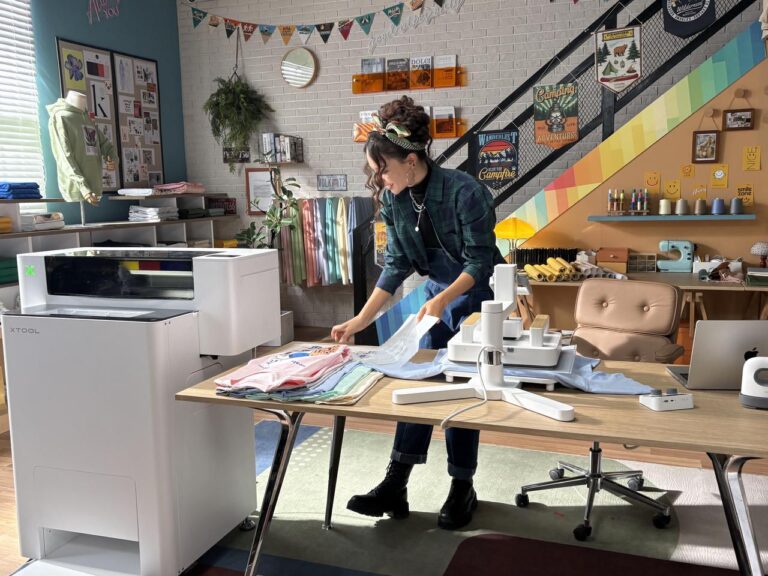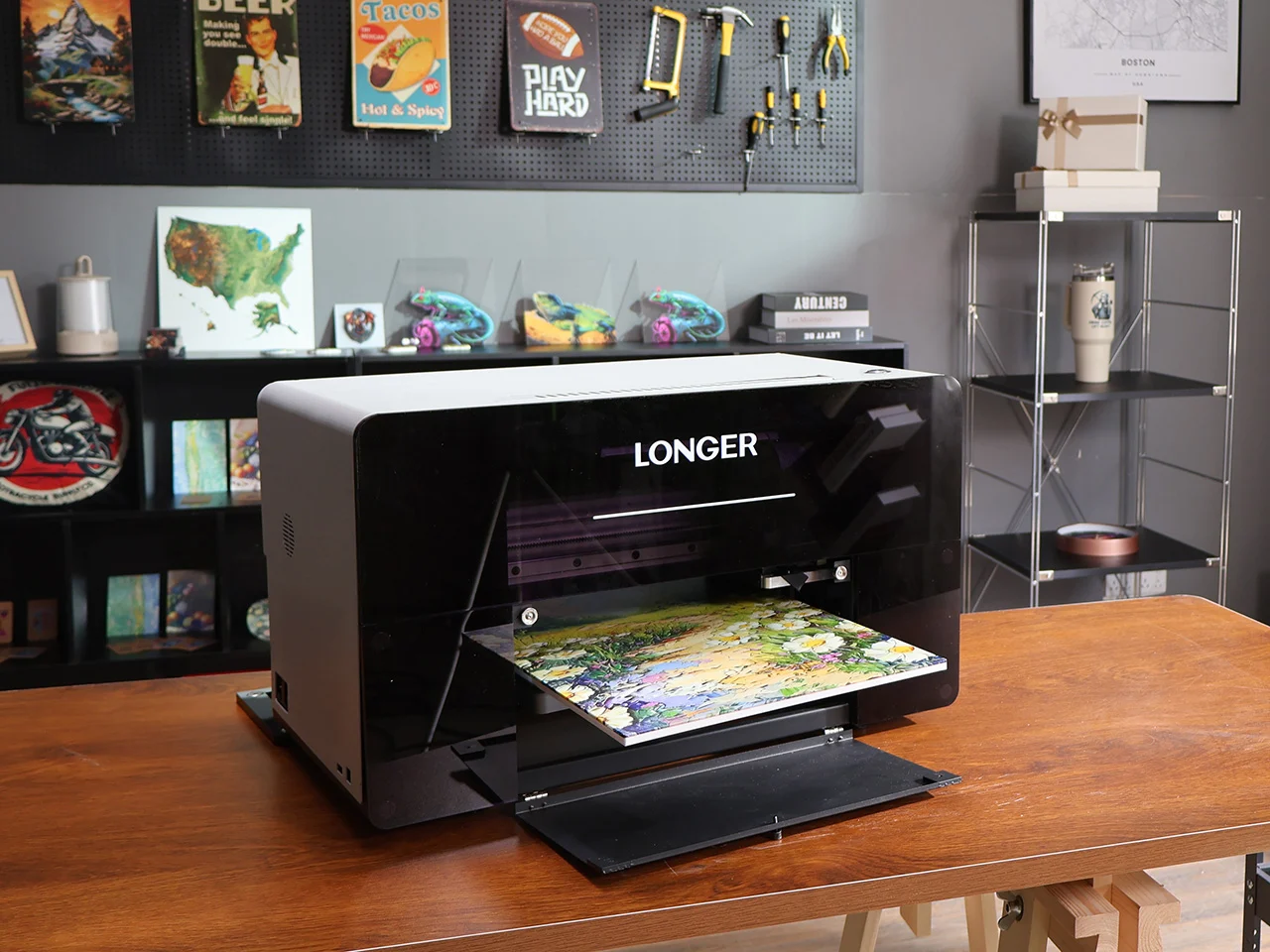
The Longer ePrint desktop printer shown during operation as part of its Kickstarter campaign.
A Kickstarter campaign launched by hardware brand Longer has raised more than $4 million for a desktop printing system that supports both UV printing and DTF (Direct-to-Film) printing. The campaign’s performance is drawing attention not because of a single product feature, but because it reflects broader changes taking place in the DTF printing market.
With over 1,500 backers and weeks remaining in the campaign, the project has become one of the most visible printing-related fundraisers currently active on the platform.
Kickstarter Performance Points to Sustained Interest
According to publicly available Kickstarter data, the campaign exceeded its original $50,000 funding goal early and continued to attract consistent backing throughout its run. The project has also been highlighted by Kickstarter with a Project We Love designation, a marker typically associated with strong engagement rather than guaranteed long-term success.
While crowdfunding results do not necessarily translate directly into commercial adoption, multi-million-dollar campaigns in technical hardware categories often serve as early indicators of shifting demand.
Desktop DTF Printing Moves Further Into the Mainstream
DTF printing has traditionally been dominated by industrial and semi-industrial systems designed for high-volume apparel production. In recent years, however, the market has seen a noticeable move toward desktop and small-format DTF printers, driven by changes in how apparel and merchandise businesses operate.
Several factors have contributed to this shift:
-
Growth of small online brands and creator-led businesses
-
Increased use of print-on-demand and short-run production models
-
Lower tolerance for large upfront equipment investments
The Kickstarter campaign reflects these dynamics, positioning desktop DTF systems as tools not just for experimentation, but for real-world production in limited-space environments.
Combining UV and DTF Workflows in One System
One aspect of the campaign that has attracted attention is the decision to combine UV printing and DTF printing in a single desktop machine. These two processes typically serve different production needs and are usually handled by separate equipment.
DTF printing is most commonly associated with:
-
Apparel transfers
-
Textile decoration
-
Small-batch garment production
UV printing is generally used for:
-
Rigid materials
-
Promotional items
-
Specialty surfaces
By supporting both workflows, hybrid systems aim to offer flexibility rather than specialization. For small businesses, this approach can reduce equipment redundancy, though it also introduces trade-offs related to speed, output volume, and maintenance requirements.
A Reflection of Small-Business Production Needs
The popularity of hybrid and desktop systems aligns closely with the needs of small production environments. Many independent operators prioritize:
-
Versatility over maximum throughput
-
Compact footprints over large industrial setups
-
The ability to test multiple product types without expanding equipment inventory
Rather than replacing industrial DTF printers, desktop systems increasingly occupy a different segment of the market, serving creators, startups, and regional print shops with modest production volumes.
The Role of Crowdfunding in Printing Technology
Crowdfunding platforms like Kickstarter have become common entry points for hardware manufacturers targeting niche professional audiences. For printing technology, these platforms offer:
-
Early demand validation
-
Direct feedback from users
-
Visibility within maker and creator communities
At the same time, crowdfunding introduces uncertainty. Production timelines, long-term support, and real-world performance often remain unknown until products reach users. As a result, backer interest is frequently influenced by a brand’s prior delivery history.
Brand Background and Campaign Context
The campaign is run by Longer, a hardware brand with previous Kickstarter projects in areas such as laser engraving and 3D printing. Several of those earlier campaigns reached high funding levels and were marked as fulfilled, a detail often considered by backers evaluating technically complex projects.
While brand history does not eliminate execution risk, it provides context for understanding why certain campaigns gain traction more quickly than others.
Desktop DTF Printers Versus Industrial Systems
Despite growing interest in desktop DTF printers, industrial systems continue to dominate high-volume production environments. Compared to industrial equipment, desktop and hybrid systems generally offer:
-
Lower production speeds
-
Smaller print areas
-
Greater sensitivity to maintenance and workflow setup
For large commercial operations, these limitations remain decisive. However, for operators focused on customization, rapid turnaround, or limited runs, desktop DTF printers can offer sufficient capability without the operational overhead of industrial machinery.
Market Implications Heading Into 2026
The success of the Kickstarter campaign suggests that demand for desktop DTF printers and hybrid printing systems is likely to continue into 2026. As more manufacturers explore compact and multi-function designs, competition in this segment is expected to increase.
This may lead to:
-
Improved reliability in desktop DTF systems
-
More standardized workflows
-
Greater differentiation between entry-level, prosumer, and industrial equipment
Rather than signaling a single product’s success, the campaign reflects broader experimentation within the DTF printing market.
Conclusion
The Kickstarter campaign launched by Longer highlights how DTF printing continues to evolve beyond traditional industrial environments. By raising more than $4 million for a desktop system that combines UV and DTF printing, the project underscores growing interest in flexible, small-scale production tools.
As the DTF printing market moves toward 2026, desktop and hybrid systems are likely to play an increasingly visible role alongside established industrial solutions, particularly among creators and small businesses seeking adaptability over scale.
Source
All funding figures and campaign details referenced in this article are based on publicly available information from the official Kickstarter campaign page.
About the Author