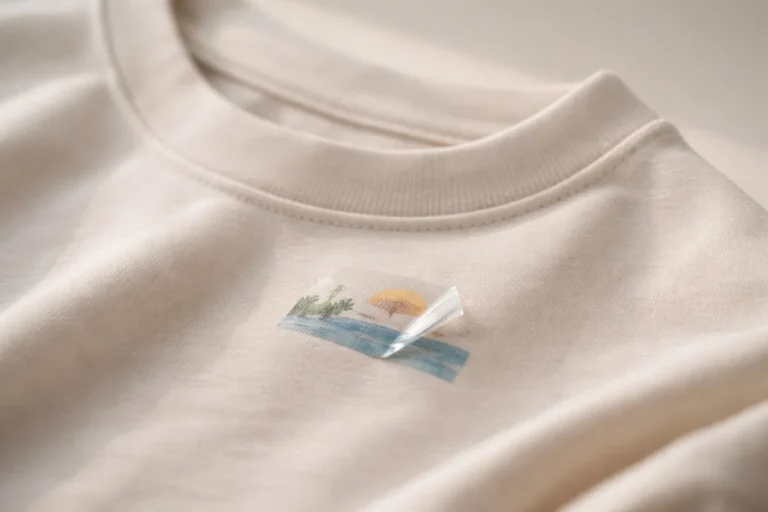
DTF transfer peeling visible shortly after heat pressing.
DTF transfers sometimes peel even when the application appears successful at first. The press opens cleanly, the design looks correct, and nothing seems wrong. The problem often shows up later, after the garment cools, flexes, or goes through its first wash. This type of DTF transfer peeling is one of the most common issues noticed after pressing.
As DTF production becomes more routine for print shops, peeling complaints are no longer rare edge cases. In most situations, the issue is not caused by a single mistake. It usually reflects small inconsistencies that add up across the process.
Where Adhesion Problems Begin
The strength of a DTF transfer is shaped long before it reaches the heat press. Film quality, adhesive powder coverage, ink laydown, and curing all influence how well a transfer bonds to fabric. These steps are part of the broader DTF printing workflow, where small variations can quietly affect long-term adhesion.
Transfers with uneven powder or slightly under-cured adhesive can look fine initially. Once the garment is worn or stretched, weak areas begin to lift. The press activates the adhesive, but it cannot fully correct problems created earlier in production.
Press Conditions Can Be Close but Not Ideal
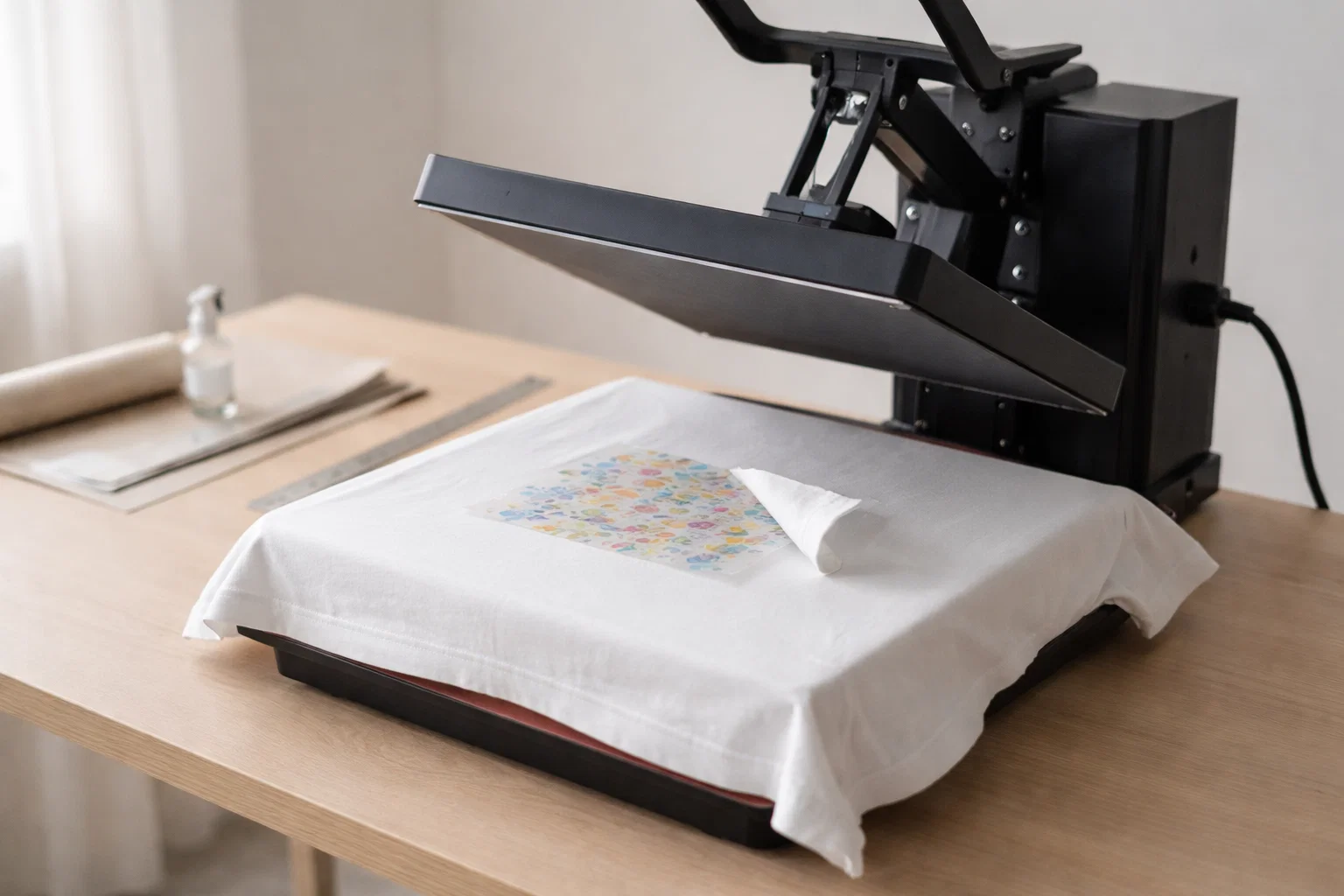
Peeling often occurs when press settings are nearly correct but not fully aligned. Temperature may run slightly low, pressure may be uneven, or dwell time may be just short enough to weaken the bond.
These differences are subtle and easy to miss during busy production. A transfer can release smoothly and still fail over time. In many cases, DTF transfer peeling is connected to small press inconsistencies rather than obvious setup errors. This is why some shops slow output slightly to protect overall production stability.
Fabric Choice Affects Long-Term Results
Not all fabrics respond the same way to DTF transfers. Blends, treated garments, and stretch materials are more likely to show adhesion issues.
Some shirts are finished with softeners or coatings that interfere with bonding. Others flex repeatedly during wear, stressing the adhesive. These situations are often grouped under broader DTF application issues, even though the transfer itself may appear correct at first.
Peeling usually begins at edges or high-movement areas where stress is highest.
Washing Reveals Weak Bonds
Many peeling complaints appear after the first wash. Heat, water, and motion quickly expose transfers that did not fully bond during pressing.
Edges lift first, followed by fine details. Customers often notice this immediately, especially on frequently worn garments. At this stage, peeling is sometimes confused with DTF color inconsistency, even though the root cause is adhesion rather than ink behavior.
A Normal Challenge as DTF Production Grows
Peeling does not mean DTF is unreliable. It highlights how sensitive the process becomes as volume increases. Small details that were easy to manage during short runs matter more in daily production.
Shops that focus on consistent preparation, stable press conditions, and realistic expectations tend to see fewer peeling issues over time. When DTF transfer peeling does occur, it is almost always the result of several small factors aligning rather than a single failure.
About the Author