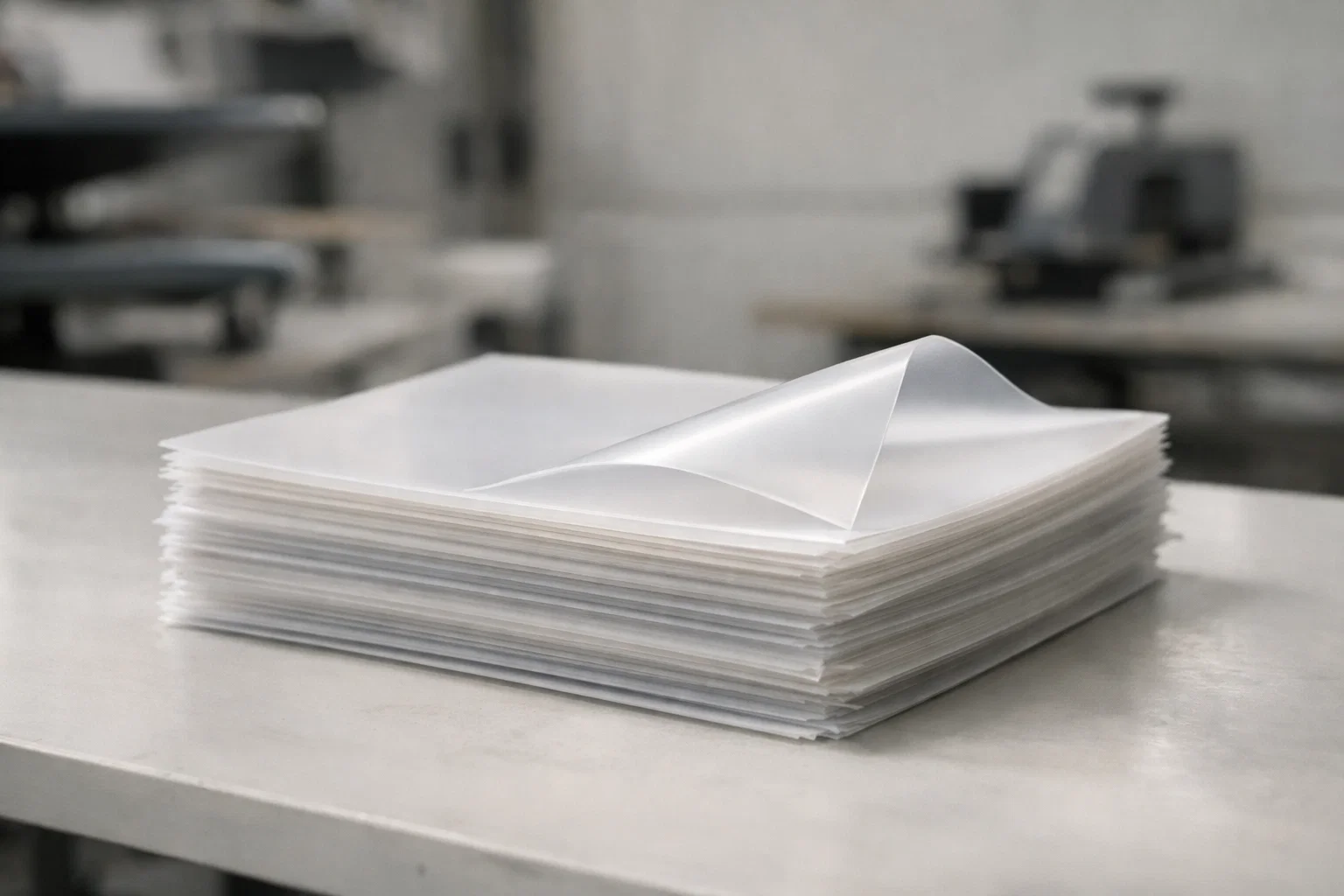
DTF film curling and lifting can increase when film selection does not match production speed.
Over the past few months, DTF film selection errors have become more visible as print shops scale production and push faster turnaround times. Transfers that once behaved predictably now release differently, lift at the edges, or fail wash tests even though printers, inks, and press settings remain unchanged.
Many operators say the issue did not appear suddenly. Instead, it surfaced gradually as production speed increased and tolerance for material variation disappeared.
DTF Film Selection Errors That Appear at Higher Production Volumes
At lower volumes, small inefficiencies often went unnoticed. Extra press time, longer cooling periods, or slower handling masked minor film limitations.
As output increased, those buffers vanished.
Several shop owners describe runs where one batch peels cleanly while the next behaves differently under identical settings. In some cases, the issue appears immediately. In others, it only becomes visible after garments cool, fold, or go through a wash cycle. This delay makes DTF film selection errors difficult to identify early.
Film Type Differences Become Clear Under Production Pressure
When production speed increases, the practical differences between hot peel, cold peel, and instant peel films become harder to ignore.
Hot peel films demand precise timing and consistent handling. Cold peel films slow workflows when cooling time is rushed or skipped. Instant peel films promise speed, but many shops report inconsistent behavior depending on coating quality and supplier consistency.
One production manager summarized the situation simply. The film worked fine until we stopped slowing down for it.
Supplier Changes Increase the Risk of Film Errors
Film availability has fluctuated throughout the past year, forcing many shops to rotate suppliers to avoid downtime. While this keeps orders moving, it also introduces subtle differences that are easy to miss during setup.
Operators report changes in film thickness, release behavior, and adhesive response. These differences may seem minor at first, but they often lead to repeat failures once production ramps up.
As one shop owner explained, nothing else changed. Same press, same ink, same designs. The only difference was the film shipment.
Why Film Related Problems Are Often Misdiagnosed
Operators rarely blame film related problems on the film itself at first. Transfers usually look acceptable immediately after pressing, which shifts attention toward heat, pressure, or curing adjustments.
In many cases, the failure appears later after cooling, folding, or washing. By then, production teams may have already adjusted settings multiple times without realizing the issue follows a specific film batch.
This pattern allows DTF film selection errors to persist longer than necessary.
How High Volume Shops Are Adjusting Their Workflows
Print shops running sustained high output are beginning to narrow their material choices. Instead of rotating films, they are locking workflows to specific film types and adjusting press profiles to match.
Many shops now wash test new film batches before full production begins. This approach reduces flexibility, but it also limits reprints, wasted garments, and customer complaints tied to inconsistent peel behavior.
Film Is No Longer a Background Material in DTF Production
As DTF operations scale, film has shifted from a background consumable to a process critical material. It now needs to align closely with production speed, press behavior, and durability expectations.
What worked reliably in slower workflows does not always hold up under high volume pressure. Shops that recognize this early tend to experience fewer disruptions.
Looking Ahead
DTF production volumes are expected to remain strong throughout 2026. Shops that address DTF film selection errors early are more likely to maintain consistent quality as output grows.
Those that continue treating film as interchangeable risk chasing quality issues that become harder to trace over time. At scale, film selection errors are no longer minor mistakes. They represent real costs in materials, labor, and customer trust.
About the Author