Same-day DTF orders are increasing reprint rates and workflow pressure in modern print shops.
As same-day turnaround expectations continue to spread across the apparel printing industry, print shops are reporting a steady rise in DTF reprint rates. Orders that once moved through production with minimal friction are now returning for rework more frequently, especially under compressed timelines.
For many operators, the issue is not a single technical failure. Instead, it reflects how tighter deadlines are reshaping decision-making inside DTF workflows.
DTF Reprint Rates Rise as Faster Turnarounds Reduce Error Visibility
When delivery windows were longer, small production inconsistencies were easier to catch. Shops had time to inspect transfers, allow garments to cool fully, or set aside samples for durability checks.
As same-day orders become routine, those buffers disappear.
Print operators say reprints often stem from issues that were not visible at the time of pressing. Transfers may look acceptable when packaged but reveal adhesion or durability problems only after initial use or washing.
Workflow Compression Drives Higher DTF Reprint Rates
In many cases, increased reprint rates are not caused by defective materials or faulty equipment. Instead, they originate from compressed workflows that leave little room for adjustment.
Common contributors include:
-
Reduced cooling time between pressing and peeling
-
Press settings drifting during continuous operation
-
Film behavior changing at higher production speeds
-
Limited quality checks during peak order periods
Individually, these factors may seem manageable. Combined, they increase the likelihood of transfers failing after delivery.
Same-Day Orders Change How Quality Is Managed
Same-day production shifts quality control from prevention to reaction.
Rather than identifying issues before orders leave the shop, many operators report discovering problems only after customers raise concerns. By that point, reprints become unavoidable.
Several shop owners note that reprints now consume a larger share of daily output, quietly reducing overall capacity even as order volume rises.
Reprint Rates Impact More Than Material Costs
While wasted film and garments are the most visible costs, reprints also affect labor efficiency and scheduling.
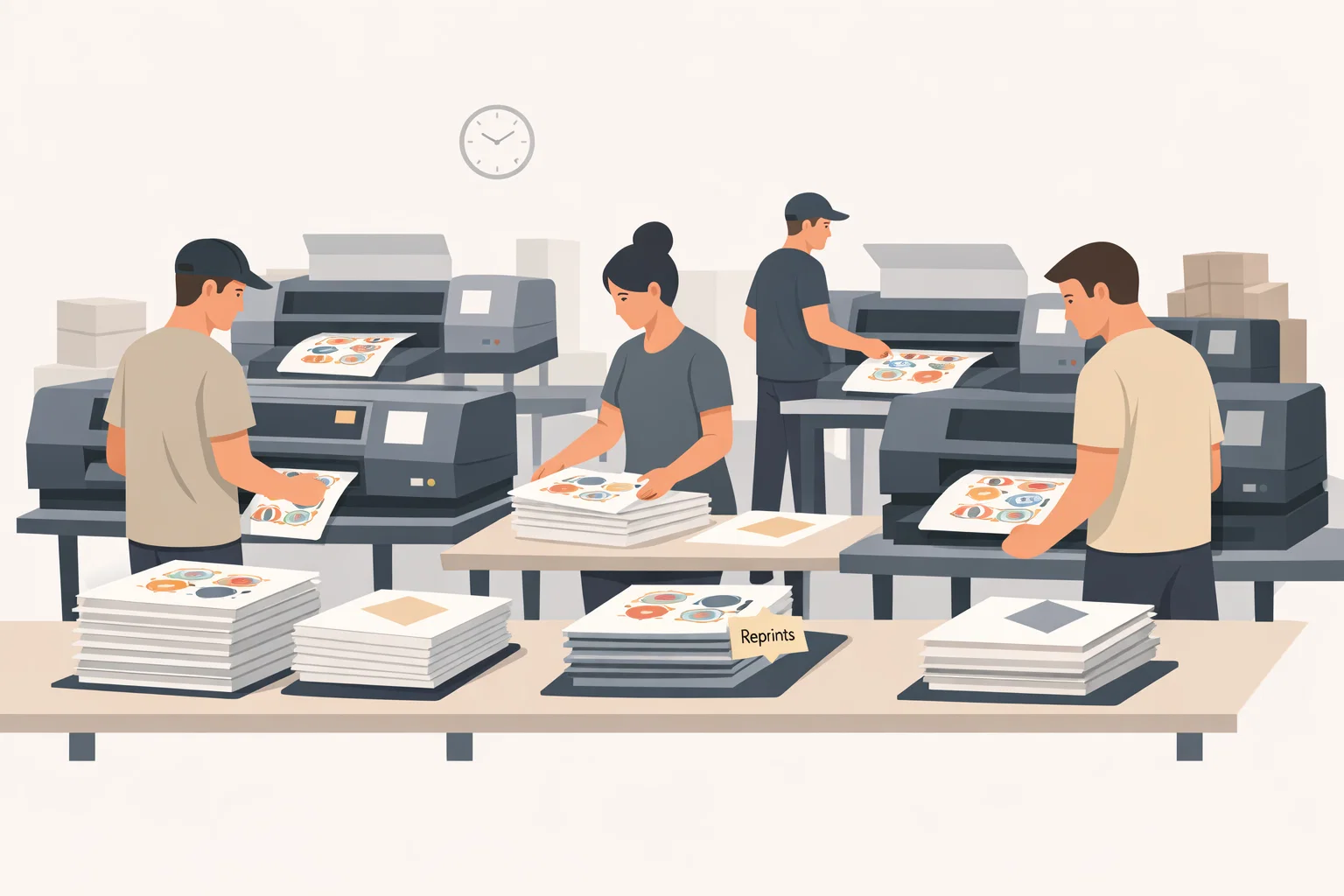
Time spent reproducing failed orders displaces new production. In high-volume environments, this creates a feedback loop where tighter schedules increase the likelihood of additional errors.
Over time, reprints can undermine the speed advantages that same-day service is meant to deliver.
Shops Are Beginning to Reevaluate Turnaround Promises
Some print shops are responding by adjusting how they position same-day service.
Instead of offering universal same-day fulfillment, operators are limiting eligibility based on design complexity, fabric type, or order size. Others are reintroducing selective quality checks for rush orders, even if it slows output slightly.
These changes reflect a growing recognition that speed without control can erode long-term efficiency.
Reprints Highlight the Limits of High-Speed DTF Production
DTF printing remains a flexible and powerful production method. However, as turnaround expectations tighten, its tolerance for variation narrows.
Reprint rates are emerging as a measurable indicator of whether a workflow is operating within sustainable limits. Shops that monitor this closely are better positioned to balance speed with reliability.
Looking Ahead
As same-day orders continue to shape customer expectations, reprint rates are likely to remain a pressure point for DTF operations.
Print shops that treat reprints as a signal rather than a cost may gain an advantage. Those that adjust workflows before errors accumulate are more likely to preserve both output speed and customer trust in an increasingly fast-moving market.
About the Author