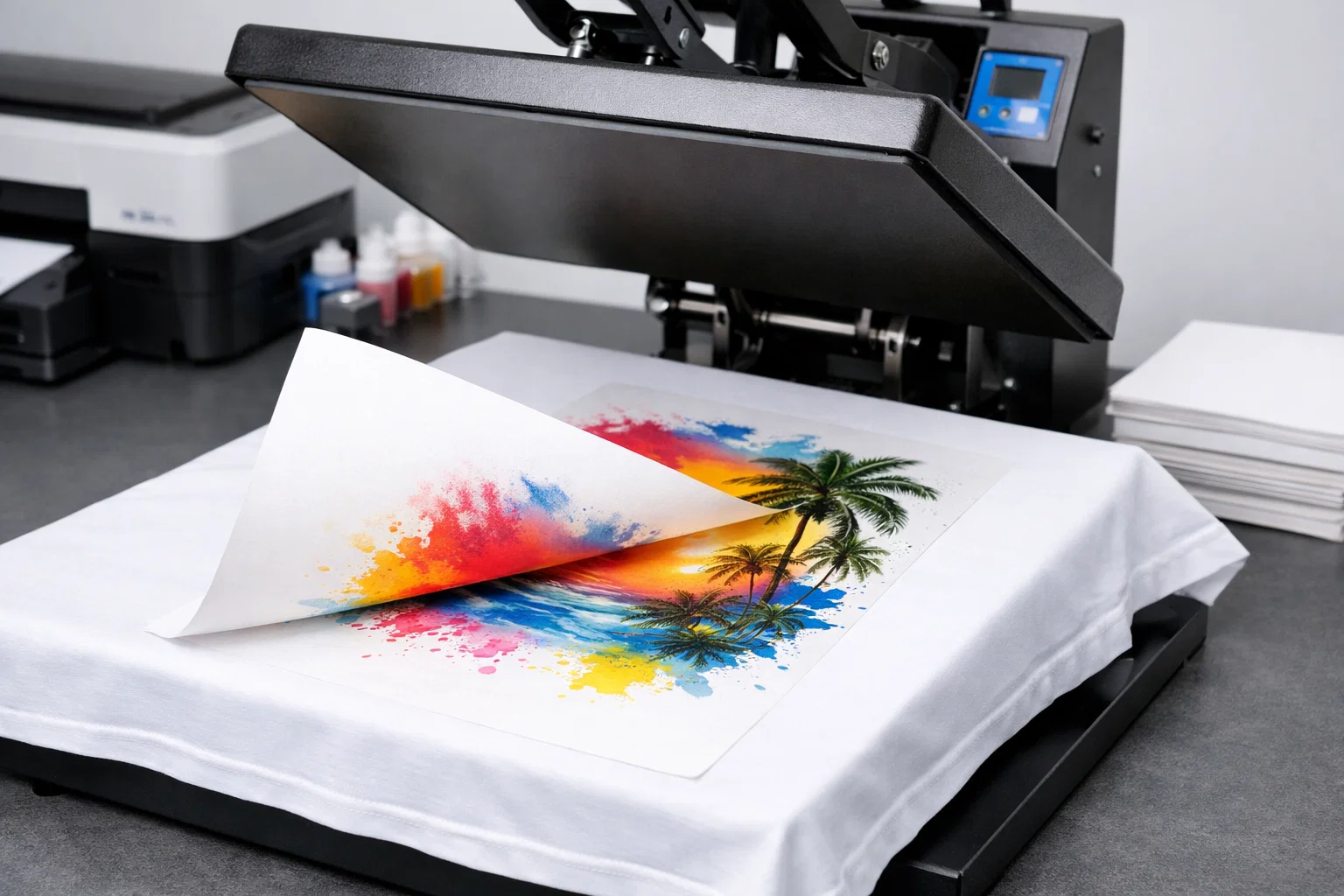
Sublimation printing transfers dye into polyester fabric using heat and pressure.
Sublimation printing is one of the most widely used digital printing methods for creating long-lasting, high-quality designs on fabrics and coated products. While newer technologies like DTF and UV printing have expanded material compatibility, sublimation remains a core process in apparel decoration, promotional products, and custom manufacturing.
This guide explains what sublimation printing is, how it works, what materials it supports, and when it is the right choice for printing businesses.
What Is Sublimation Printing?
Sublimation printing is a digital printing process that uses heat to transfer dye directly into a material rather than applying ink on top of its surface. During sublimation, solid dye turns into gas without becoming liquid and permanently bonds with the substrate.
Unlike surface-level printing methods, sublimation becomes part of the material itself. This results in prints that do not crack, peel, or fade under normal use.
How Sublimation Printing Works
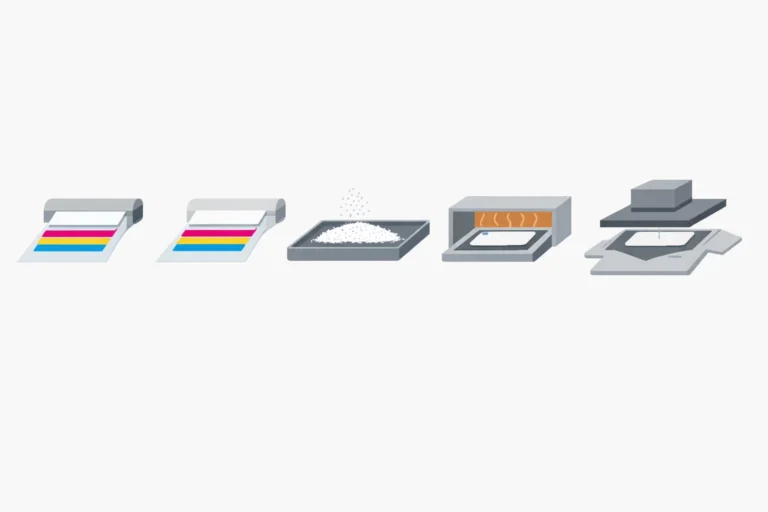
The sublimation process follows a precise workflow designed to activate dye through heat and pressure.
Step 1: Design Printing
The artwork is printed onto special sublimation transfer paper using sublimation ink.
Step 2: Heat Transfer
The printed paper is placed onto the target substrate and pressed using a heat press at high temperature, typically around 190–205°C (375–400°F).
Step 3: Dye Sublimation
Under heat and pressure, the ink sublimates, turning into gas and penetrating the polymer-coated surface or polyester fibers.
Step 4: Permanent Bonding
As the material cools, the dye solidifies inside the substrate, creating a permanent, wash-resistant print.
Because the ink bonds at a molecular level, sublimation prints are exceptionally durable.
What Materials Can Be Used for Sublimation Printing?
Material compatibility is the most important limitation of sublimation printing.
Compatible Materials
-
Polyester fabrics (100% or high-poly blends)
-
Polymer-coated hard goods such as mugs, phone cases, metal panels, and mouse pads
-
Light-colored surfaces, preferably white or pastel
Not Compatible
-
Cotton and natural fibers without special coatings
-
Dark-colored fabrics
-
Untreated hard surfaces
Sublimation ink is transparent, meaning it relies on the base color of the material to appear correctly.
Sublimation Printing vs Other Printing Methods
Understanding where sublimation fits among other printing technologies helps businesses choose the right method.
Sublimation vs DTF Printing
-
Sublimation is limited to polyester and coated items
-
DTF works on cotton, polyester, blends, and dark fabrics
-
Sublimation produces no hand feel; DTF adds a thin ink layer
Sublimation vs DTG Printing
-
Sublimation offers superior durability on polyester
-
DTG works better on cotton garments
-
Sublimation cannot print white ink
Sublimation vs Heat Transfer Vinyl
-
Sublimation is faster for full-color designs
-
Vinyl offers color flexibility but adds thickness
Each method serves different production needs rather than replacing one another.
Advantages of Sublimation Printing
Sublimation remains popular because of its unique benefits.
Long-Lasting Prints
Since the dye becomes part of the material, prints do not peel, crack, or wash out.
No Texture or Weight
Sublimation prints are completely smooth with no added layer.
High Color Vibrancy
On white polyester, sublimation delivers bright, sharp colors with excellent detail.
Low Maintenance
Sublimation printers require less daily maintenance compared to white-ink systems.
Cost-Effective for Specific Products
Ideal for sportswear, flags, signage, and promotional items.
Limitations of Sublimation Printing
Despite its strengths, sublimation has clear constraints.
-
Cannot print on dark fabrics
-
Requires polyester or coated substrates
-
Limited flexibility for mixed-material products
-
White ink is not possible
These limitations are why many print shops combine sublimation with DTF or DTG systems.
Common Applications of Sublimation Printing
Sublimation is widely used across multiple industries.
Apparel
-
Sports jerseys
-
Activewear
-
Performance t-shirts
-
Leggings and yoga wear
Promotional Products
-
Mugs
-
Phone cases
-
Keychains
-
Mouse pads
Signage and Décor
-
Metal photo panels
-
Flags and banners
-
Polyester wall art
For products that require durability and flexibility, sublimation remains a top choice.
Sublimation Equipment Overview
To run a sublimation workflow, businesses typically need:
-
Sublimation inkjet printer
-
Sublimation ink
-
Sublimation transfer paper
-
Heat press
-
Polyester garments or coated blanks
Compared to DTF or DTG setups, sublimation equipment is relatively affordable and beginner-friendly.
Is Sublimation Printing Right for Your Business?
Sublimation is an excellent solution if your business focuses on:
-
Polyester apparel
-
White or light-colored products
-
High-durability prints
-
Sportswear or promotional goods
If your customers demand cotton garments or dark fabrics, sublimation alone may not be sufficient.
Many modern print shops use sublimation alongside DTF printing to cover a wider range of materials and customer needs.
Sublimation Printing in Today’s Market
While newer technologies continue to emerge, sublimation remains a stable and proven printing method. Its simplicity, durability, and cost efficiency make it especially valuable for specialized product lines.
Rather than becoming obsolete, sublimation has found its place as part of a multi-method production strategy in modern print businesses.
Final Thoughts
Sublimation printing is a powerful digital printing technique that delivers unmatched durability and print quality on polyester and coated products. While it has material limitations, its benefits make it indispensable for many apparel and promotional printing operations.
Understanding how sublimation works and where it performs best allows businesses to choose the right technology for each product category.
About the Author