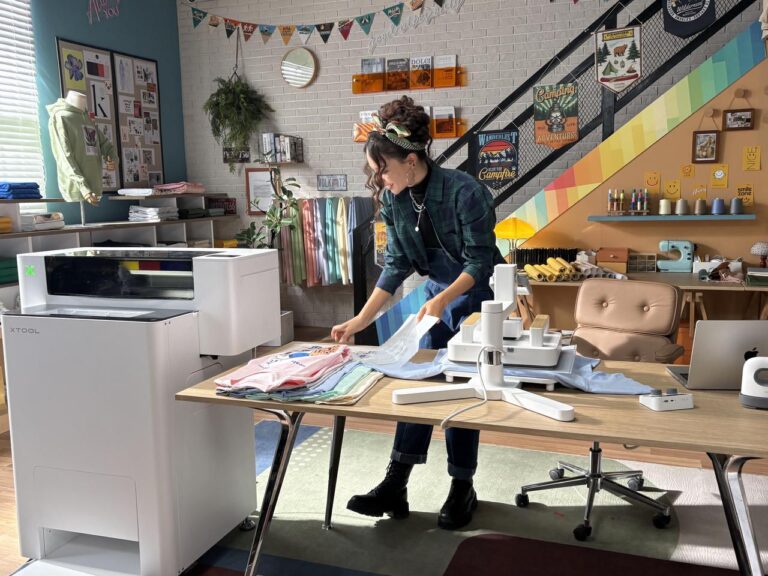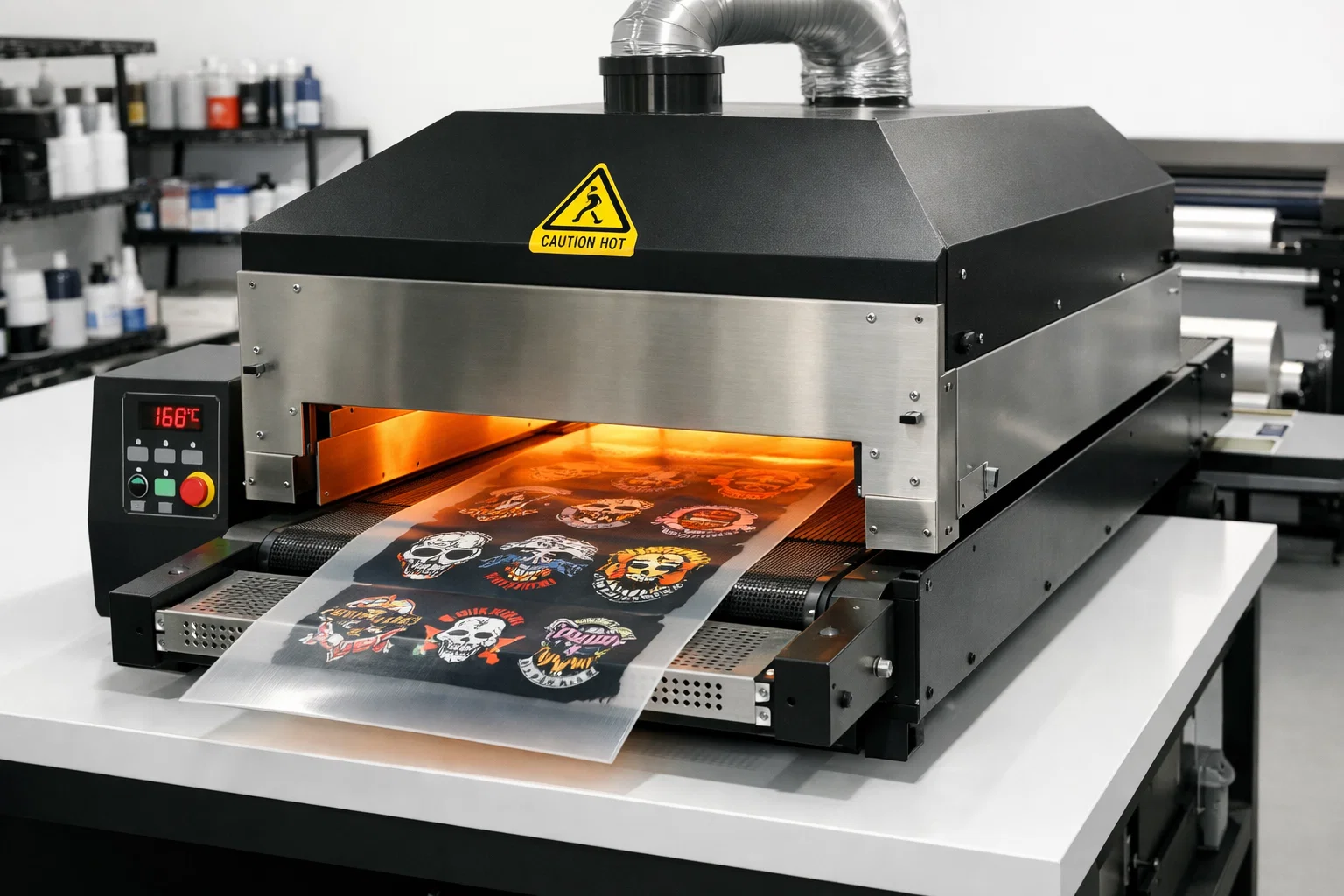
A conveyor-style DTF curing machine used to cure adhesive powder on DTF transfer film.
The rapid growth of Direct-to-Film printing has transformed how apparel, promotional products, and custom merchandise are produced. As DTF technology matures, one component has become increasingly critical to print quality, durability, and production efficiency: the DTF curing machine.
While printers and inks often receive the most attention, curing is the stage that determines whether a DTF transfer will succeed or fail. Improper curing leads to poor adhesion, cracking, color dullness, and premature wear. Proper curing creates professional-grade transfers that withstand washing, stretching, and long-term use.
This guide explains what a DTF curing machine is, how it works, why it matters, and how to choose the right solution for your production environment.
What Is a DTF Curing Machine?
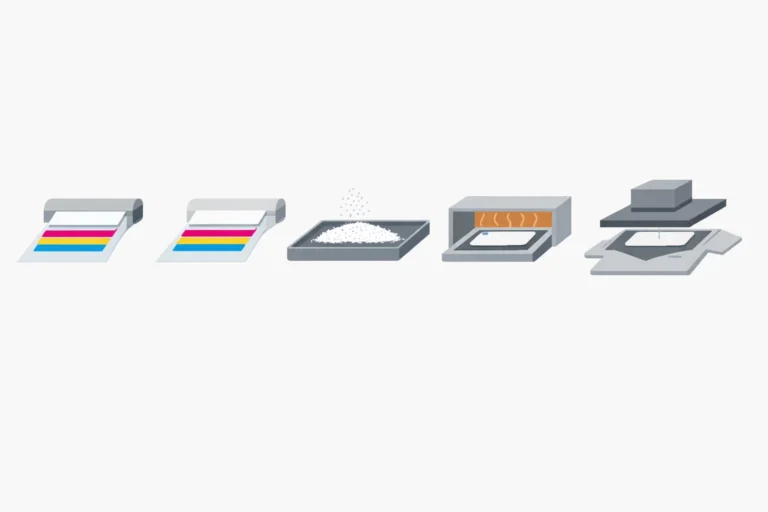
A DTF curing machine is a specialized heat-based device used to melt and activate hot-melt adhesive powder applied to a printed DTF film. During the curing process, heat causes the powder to bond evenly with the ink layer, forming a stable adhesive surface that later transfers to fabric using a heat press.
Curing is not the same as pressing.
Curing prepares the transfer.
Pressing applies it to the garment.
Without proper curing, even the best DTF printer and ink combination will produce inconsistent or unusable results.
Why Curing Is a Critical Step in DTF Printing
DTF printing involves multiple variables: ink density, powder quality, film coating, humidity, and temperature. The curing stage acts as the stabilizer that locks everything together.
A properly cured DTF transfer delivers:
-
Strong adhesion to cotton, polyester, blends, and specialty fabrics
-
Smooth, flexible prints that resist cracking
-
Vibrant colors with correct opacity
-
Improved wash durability and stretch recovery
In contrast, under-curing leaves powder partially melted, leading to weak bonding. Over-curing can scorch ink, discolor whites, or cause brittle transfers.
Curing consistency is one of the biggest differences between hobby-level and commercial-grade DTF production.
How a DTF Curing Machine Works
After printing and powder application, the DTF film enters the curing stage. The curing machine applies controlled heat over a fixed time period, allowing the adhesive powder to melt evenly without overheating the ink layer.
Most curing machines operate within these general ranges:
-
Temperature: 160°C–177°C (320°F–350°F)
-
Time: 30–90 seconds depending on powder, film, and machine design
The goal is a smooth, slightly glossy adhesive surface that is fully melted but not bubbling, yellowing, or burning.
Modern curing machines are designed to distribute heat evenly, reducing hot spots and minimizing operator error.
Types of DTF Curing Machines
Different production environments require different curing solutions. The most common categories include the following.
Conveyor Belt Curing Machines
Conveyor curing systems are the most popular choice for professional DTF shops. The printed film moves through a heated tunnel at a controlled speed, ensuring uniform curing across the entire design.
Best suited for:
-
Medium to high production volume
-
Print shops running multiple printers
-
Consistent, repeatable results
Advantages:
-
Continuous workflow
-
Even heat distribution
-
Scalable production
Curing Ovens and Cabinets
Curing ovens use a static heating chamber where films are placed on trays or racks. These systems are common in smaller shops or as secondary curing units.
Best suited for:
-
Small to mid-volume operations
-
Limited floor space
-
Batch processing
Advantages:
-
Lower entry cost
-
Simple operation
-
Good control for short runs
Powder Shaker and Curing Combos
Automated powder shaker and curing machines combine adhesive application and curing in a single workflow. These systems are increasingly popular in modern DTF production lines.
Best suited for:
-
High-output commercial environments
-
Shops prioritizing automation
-
Reduced labor requirements
Advantages:
-
Faster throughput
-
Reduced powder waste
-
Consistent curing quality
Manual Alternatives and Why They Are Limited
Some beginners attempt to cure DTF transfers using heat presses, hover methods, or household ovens. While these methods can work temporarily, they introduce major limitations.
Manual curing risks:
-
Uneven heat exposure
-
Inconsistent adhesion
-
Ink scorching
-
Reduced production speed
As order volume grows, manual methods quickly become bottlenecks. Investing in a dedicated curing machine is one of the first upgrades that significantly improves reliability and scalability.
Key Features to Look for in a DTF Curing Machine
When evaluating curing equipment, consider the following technical and operational factors.
Temperature Stability
Precise temperature control is essential. Machines with digital thermostats and stable heating elements reduce curing failures and material waste.
Even Heat Distribution
Uniform airflow and heating design prevent cold spots and overcooked edges, especially on large or dense designs.
Adjustable Speed or Timer Controls
Different powders and films require different curing profiles. Flexibility allows operators to fine-tune settings.
Ventilation and Safety
DTF powder curing produces fumes. Proper ventilation systems improve working conditions and compliance with safety standards.
Production Capacity
Match the curing machine size and speed to your printer output. Undersized curing units slow down the entire operation.
Common Curing Problems and How to Avoid Them
Even with professional equipment, curing issues can occur. Understanding common mistakes helps maintain consistent quality.
Powder not fully melted
Cause: Low temperature or short curing time
Solution: Increase temperature slightly or slow conveyor speed
Yellowing or burned areas
Cause: Excessive heat or prolonged exposure
Solution: Reduce temperature or curing duration
Rough or grainy texture
Cause: Uneven powder application or airflow
Solution: Improve powder distribution and machine calibration
Poor wash durability
Cause: Incomplete curing or incompatible materials
Solution: Verify powder, film, and ink compatibility
Routine testing and documentation of curing profiles help prevent repeat issues.
Curing Machines and Production Scalability
As DTF businesses grow, curing capacity often becomes the limiting factor rather than printing speed. A single curing bottleneck can slow multiple printers.
Professional shops typically scale curing capacity before adding additional printers. This ensures:
-
Balanced workflow
-
Faster order turnaround
-
Lower labor costs per transfer
-
Improved consistency across batches
For print-on-demand and B2B fulfillment, curing reliability directly affects customer satisfaction and repeat business.
Energy Efficiency and Operating Costs
Modern curing machines are designed with improved insulation and energy efficiency. While curing units consume significant power, optimized systems reduce heat loss and warm-up time.
When calculating ROI, consider:
-
Electricity usage
-
Reduced reprints and waste
-
Labor savings
-
Higher throughput
In most cases, a dedicated curing machine pays for itself quickly as production volume increases.
Final Thoughts: Is a DTF Curing Machine Worth It?
For any serious DTF printing operation, a curing machine is not optional. It is a core production asset that directly impacts quality, durability, and scalability.
Whether you operate a small custom apparel shop or a high-volume transfer business, proper curing separates amateur results from professional output. As the DTF market becomes more competitive, consistency and reliability matter more than ever.
Investing in the right curing solution ensures your transfers meet modern expectations for performance, appearance, and longevity.
About the Author