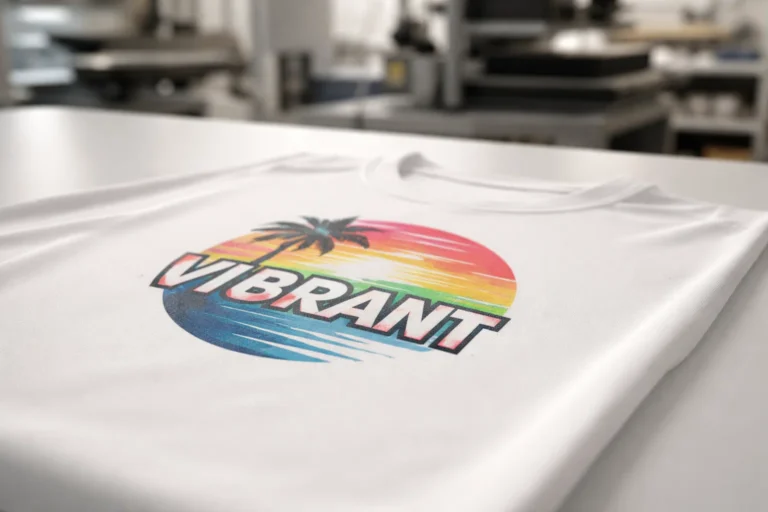
White ink stability is becoming a key factor in large-scale DTF apparel production.
As Direct-to-Film (DTF) printing continues to scale across commercial apparel operations, white ink management is increasingly shaping production efficiency, print consistency, and overall profitability. What was once treated as a routine maintenance detail is now viewed by many high-volume print shops as a core operational priority.
White Ink Stability Becomes a Production Constraint
White ink behaves differently from standard CMYK inks. Its heavier pigment load makes it more prone to settling, separation, and viscosity changes when circulation and temperature control are insufficient. In high-output environments, these characteristics can quickly translate into clogged printheads, uneven opacity, and unplanned downtime.
For print shops running long production shifts or continuous roll-to-roll workflows, even short interruptions can disrupt schedules and increase per-unit costs. As order volumes rise, the margin for error around white ink performance narrows significantly.
Downtime and Waste Drive Operational Costs
Production managers report that white ink-related issues are among the leading causes of maintenance interventions in DTF workflows. Inconsistent ink flow or delayed agitation can result in failed prints, wasted film, and additional labor spent on cleaning and recalibration.
Over time, these disruptions accumulate. In high-volume apparel production, white ink inefficiencies can quietly erode margins, particularly when fulfillment deadlines are tight and reprints are not an option.
Workflow Adjustments Reflect New Priorities
To mitigate these risks, many print shops are rethinking how white ink is handled within their daily operations. This includes tighter control over idle times, more frequent circulation cycles, and closer monitoring of ink conditions during extended production runs.
Rather than relying on reactive maintenance, high-volume operators are moving toward preventative approaches designed to keep white ink stable throughout the entire workflow. This shift reflects a broader trend toward production-first decision-making as DTF becomes a core manufacturing process.
Equipment Design Gains New Importance
As DTF adoption expands, equipment selection is increasingly influenced by how effectively printers manage white ink under sustained load. Features such as continuous circulation paths, automated agitation routines, and larger ink reservoirs are now evaluated alongside speed and resolution.
In high-volume environments, consistency matters as much as output. Stable white ink performance helps ensure uniform color density, predictable layering, and repeatable results across large apparel batches.
Print Quality and Brand Expectations
For brands and fulfillment providers, white ink quality directly affects visual consistency and perceived product value. Variations in opacity or texture can lead to noticeable differences between production runs, increasing the risk of returns or customer dissatisfaction.
As apparel printing becomes more competitive, print shops are under pressure to deliver consistent results at scale. White ink reliability plays a central role in meeting those expectations.
Looking Ahead
As the DTF market matures, operational reliability is emerging as a key differentiator. White ink management, once treated as a secondary technical concern, is now recognized as a defining factor in high-volume apparel production.
Industry observers expect continued refinement in ink chemistry, circulation systems, and automation as print shops push DTF workflows toward higher throughput and tighter production tolerances. For operators focused on scaling sustainably, mastering white ink management is quickly becoming essential rather than optional.
About the Author