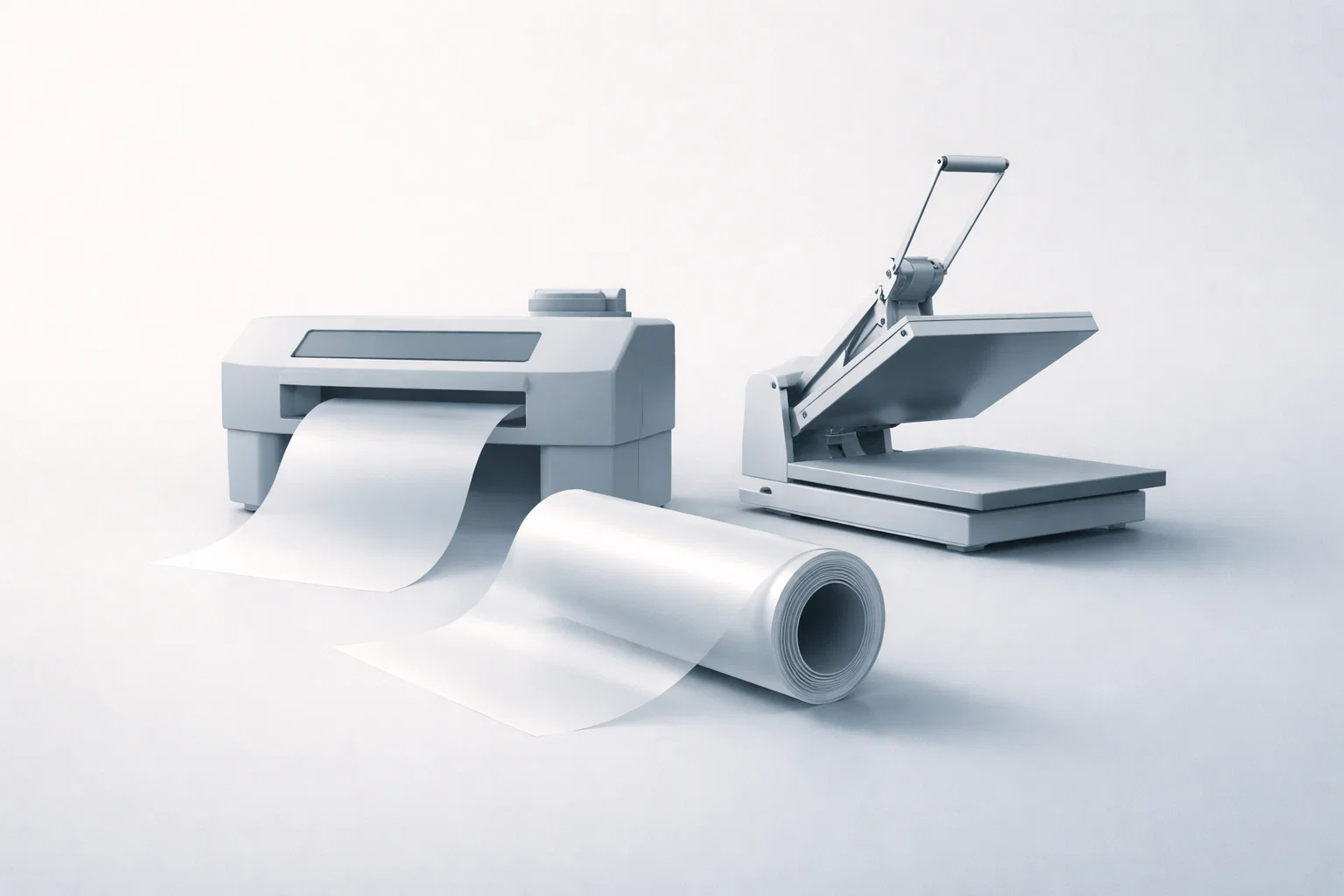
DTF printing production costs illustrated in a modern print shop environment
Direct to Film printing continues to expand across the global apparel industry, driven by demand for customization, faster turnaround, and lower production risk. While DTF is often promoted as a low-cost alternative to traditional printing methods, the real cost structure behind professional DTF production is more complex. In 2026, print shops evaluating profitability must look beyond printer prices and understand the full range of operating expenses.
This guide breaks down the real production costs of DTF printing in 2026, from equipment and consumables to labor, maintenance, and scalability. Whether you run a small print shop or a growing production facility, understanding these costs is essential for long-term profitability.
The True Cost of DTF Printing Goes Beyond the Printer
Many businesses begin their DTF journey by focusing on printer price alone. While entry-level machines remain affordable, production expenses extend far beyond the initial investment.
DTF printing costs fall into six main categories:
-
Equipment and setup
-
Ink consumption
-
Film and adhesive powder
-
Labor and workflow efficiency
-
Maintenance and downtime
-
Scaling and overhead costs
Each plays a critical role in determining cost per print and overall margins.
Equipment and Initial Setup Costs
In 2026, DTF printer pricing spans a wide range depending on production needs.
-
Entry-level desktop DTF printers typically range from $2,500 to $5,000
-
Mid-tier professional systems range from $7,000 to $15,000
-
Industrial roll-to-roll systems can exceed $30,000
Beyond the printer itself, shops must factor in curing equipment, heat presses, RIP software, ventilation, and workspace preparation. Even modest setups often require an additional $1,500 to $4,000 in supporting equipment.
While these are largely fixed costs, they directly influence production capacity and long-term efficiency.
Ink Consumption and Cost Per Print
DTF ink costs remain one of the most important variable expenses in daily production. White ink usage in particular has a significant impact on operating costs.
In 2026, average ink pricing typically falls within these ranges:
-
CMYK ink: moderate cost per liter
-
White ink: higher cost due to formulation and usage volume
Ink consumption varies based on design coverage, resolution, and garment color. Full-coverage designs and dark garments require heavier white ink layers, increasing cost per transfer.
On average, ink costs represent a meaningful portion of per-print expenses, especially for high-resolution or graphic-heavy designs.
Film and Adhesive Powder Expenses
DTF film and adhesive powder costs are often underestimated by new print shops. These consumables are required for every transfer and scale directly with volume.
Key cost factors include:
-
Film quality and peel type
-
Powder consistency and bonding strength
-
Waste from misprints or setup errors
In 2026, high-quality PET films and reliable powders command slightly higher prices but reduce reprints and failure rates. Lower-cost consumables may appear attractive upfront but often increase long-term costs through wasted materials and inconsistent results.
Labor Costs and Workflow Efficiency
Labor remains one of the most significant operational costs in DTF printing. While DTF workflows are simpler than screen printing, production still involves multiple steps that require time and consistency.
Labor costs are influenced by:
-
Design preparation and RIP processing
-
Printing and powder application
-
Curing and transfer staging
-
Heat press application and finishing
Efficient workflows reduce labor hours per transfer, lowering overall cost per unit. Many print shops in 2026 invest in semi-automation or standardized processes to control labor expenses as volume grows.
Maintenance, Downtime, and Hidden Costs
Maintenance is an unavoidable part of DTF printing. Print head care, ink circulation, and routine cleaning all require time and materials.
Hidden costs often include:
-
Replacement parts and consumables
-
Lost production during downtime
-
Reprints caused by clogging or adhesion failures
Printers with stable ink systems and strong manufacturer support tend to reduce these costs over time. Shops that ignore maintenance planning often experience higher long-term expenses despite lower initial investment.
Scaling Costs as Volume Increases
DTF printing scales efficiently, but scaling introduces new cost considerations. As order volume increases, shops must account for:
-
Additional labor shifts
-
Higher consumable usage
-
Increased maintenance frequency
-
Space and power requirements
Many operations find that per-unit costs decrease as volume grows, provided workflows are optimized and equipment is properly matched to demand. Poor scaling decisions, however, can quickly erode margins.
Cost Comparison: DTF vs Traditional Printing Methods
Compared to screen printing, DTF eliminates setup costs, screens, and minimum order requirements. This makes it highly cost-effective for short runs and on-demand production.
Compared to DTG, DTF avoids pretreatment expenses and expands fabric compatibility, reducing waste and complexity.
While DTF may not replace every traditional method, its cost structure offers flexibility that aligns well with modern apparel production models.
Understanding Real Profitability in 2026
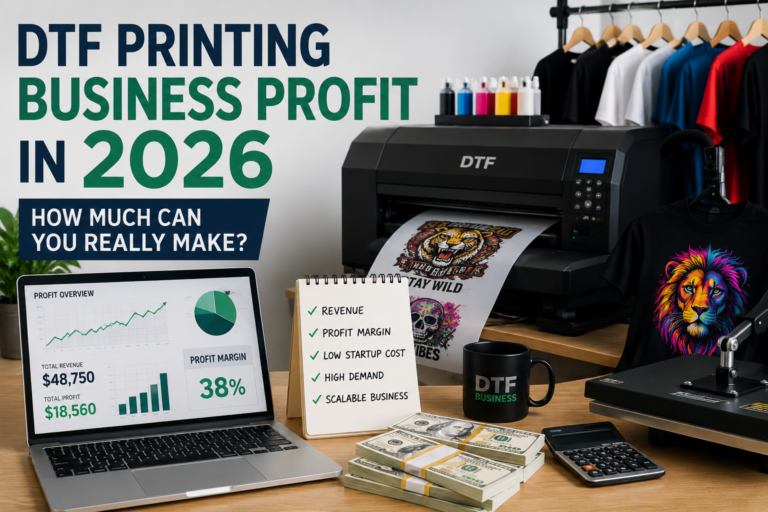
The profitability of DTF printing depends less on individual costs and more on how those costs are managed together. Shops that track cost per transfer, optimize workflows, and invest in reliable equipment consistently outperform those that focus only on upfront savings.
In 2026, successful DTF businesses treat cost analysis as an ongoing process, not a one-time calculation.
Final Thoughts
DTF printing remains one of the most accessible and flexible production methods in the apparel industry. However, understanding real production expenses is critical for building a sustainable operation. From ink and film to labor and maintenance, every cost category plays a role in long-term success.
Print shops that approach DTF printing with a clear cost strategy are better positioned to scale, adapt, and remain profitable as the industry continues to evolve.
About the Author