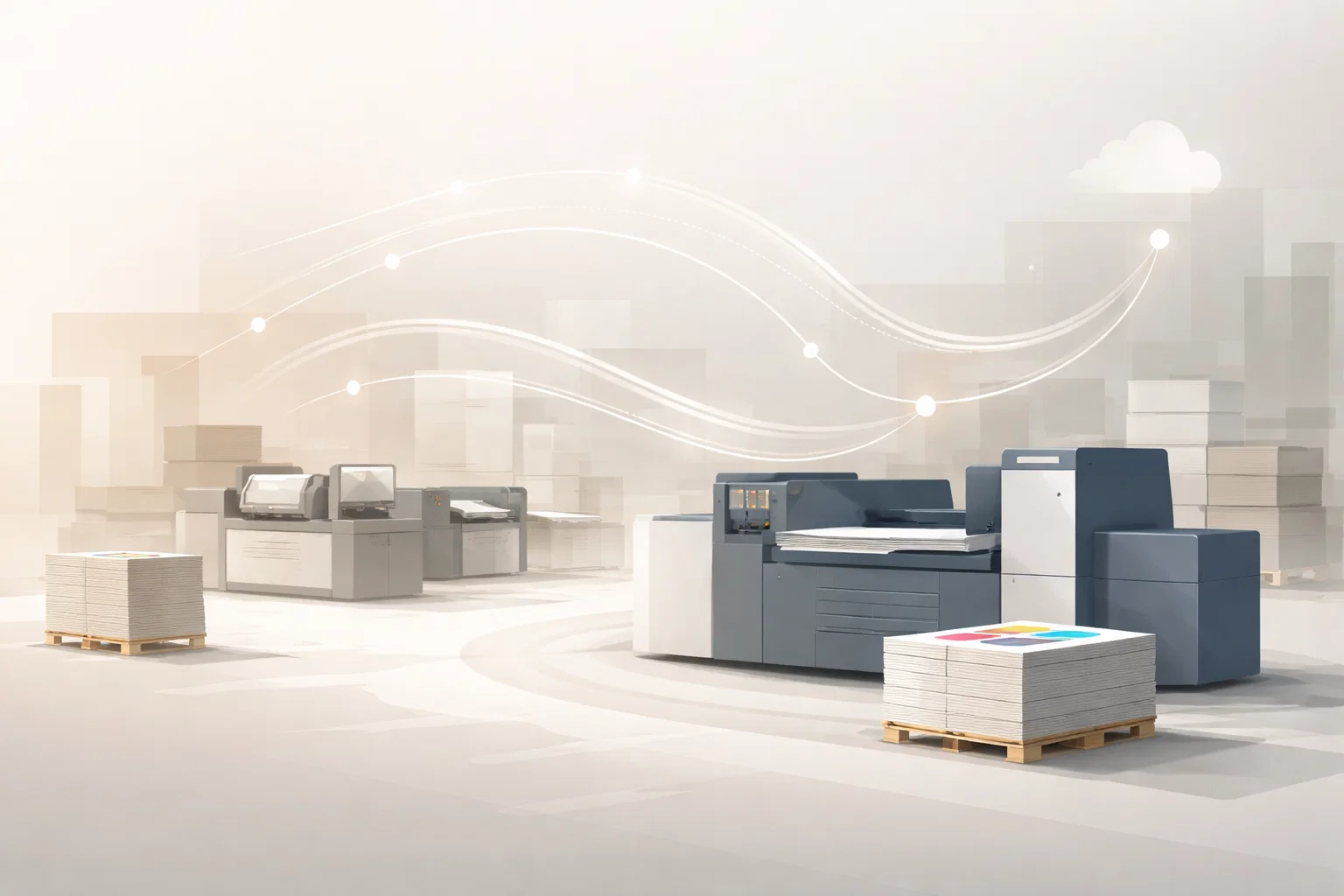
On-demand production is reshaping workflows across the global printing industry
The global printing industry is undergoing a quiet but decisive transformation. Across commercial, apparel, and promotional printing segments, traditional production models built around long runs and forecast-driven output are being replaced by more flexible, demand-led systems. This shift is now a recurring theme across current printing industry news worldwide.
Rather than reacting to short-term market fluctuations, print businesses are restructuring how work moves through production. Speed, adaptability, and cost control have become strategic priorities, forcing operators to reassess long-standing workflows and equipment investments.
A Structural Shift in Printing Industry Operations
For decades, efficiency in the printing industry was defined by volume. Large batch sizes, standardized designs, and centralized production facilities shaped how print businesses operated. Today, customer behavior has disrupted this model.
Brands increasingly require shorter production cycles, customized outputs, and rapid fulfillment without committing to excess inventory. As a result, print shops are transitioning away from static production planning toward systems that allow output to respond directly to confirmed demand.
Printing industry news throughout late 2025 and early 2026 reflects this change. On-demand production is no longer treated as a niche capability. It is becoming a baseline expectation across multiple print segments.
Digital Workflows Take Priority Over Batch Production
One of the most significant developments highlighted in recent printing industry news is the prioritization of digital-first workflows. Technologies that allow production to be paused, resumed, or redirected without setup penalties are gaining favor over methods that rely on rigid batching.
This trend affects not only apparel printing but also signage, packaging, and short-run commercial print. Businesses adopting digitally driven workflows report improved scheduling flexibility, reduced waste, and better alignment between production capacity and real-time order intake.
The ability to decouple design output from final application or finishing stages has emerged as a key operational advantage.
Equipment Investment Strategies Are Changing
Printing industry news coverage shows that equipment investment decisions are increasingly tied to flexibility rather than raw output speed. Print businesses are evaluating machines based on how well they integrate into modular workflows rather than how many units they can produce per hour.
This has led to increased interest in systems that support mixed job types, rapid changeovers, and scalable production without proportional increases in labor. Automation, simplified maintenance, and compatibility with multiple substrates are now central evaluation criteria.
As a result, equipment that once served specialized roles is being repositioned as core infrastructure within modern print operations.
Labor Constraints Accelerate Workflow Simplification
Labor availability continues to influence strategic planning across the printing industry. Skilled operators are harder to recruit, and training timelines remain a challenge for growing businesses.
Printing industry news frequently points to workflow simplification as a response. Production models that reduce dependency on specialized setup skills allow shops to operate with smaller teams while maintaining throughput. Cross-training and automation are increasingly viewed as necessities rather than efficiency upgrades.
These pressures are reinforcing the move toward adaptable, technology-driven production systems.
What This Means for the Future of the Printing Industry
The changes currently shaping printing industry news signal a broader realignment of how print businesses compete. Success is becoming less dependent on scale alone and more closely tied to responsiveness, cost control, and operational resilience.
As on-demand production models mature, print operations that invest in flexible workflows are better positioned to navigate market volatility. While traditional methods will continue to serve specific use cases, the industry’s center of gravity is shifting toward systems that support continuous adaptation.
For print professionals tracking printing industry news, this transition is no longer theoretical. It is already influencing investment decisions, workflow design, and long-term business strategy.
About the Author