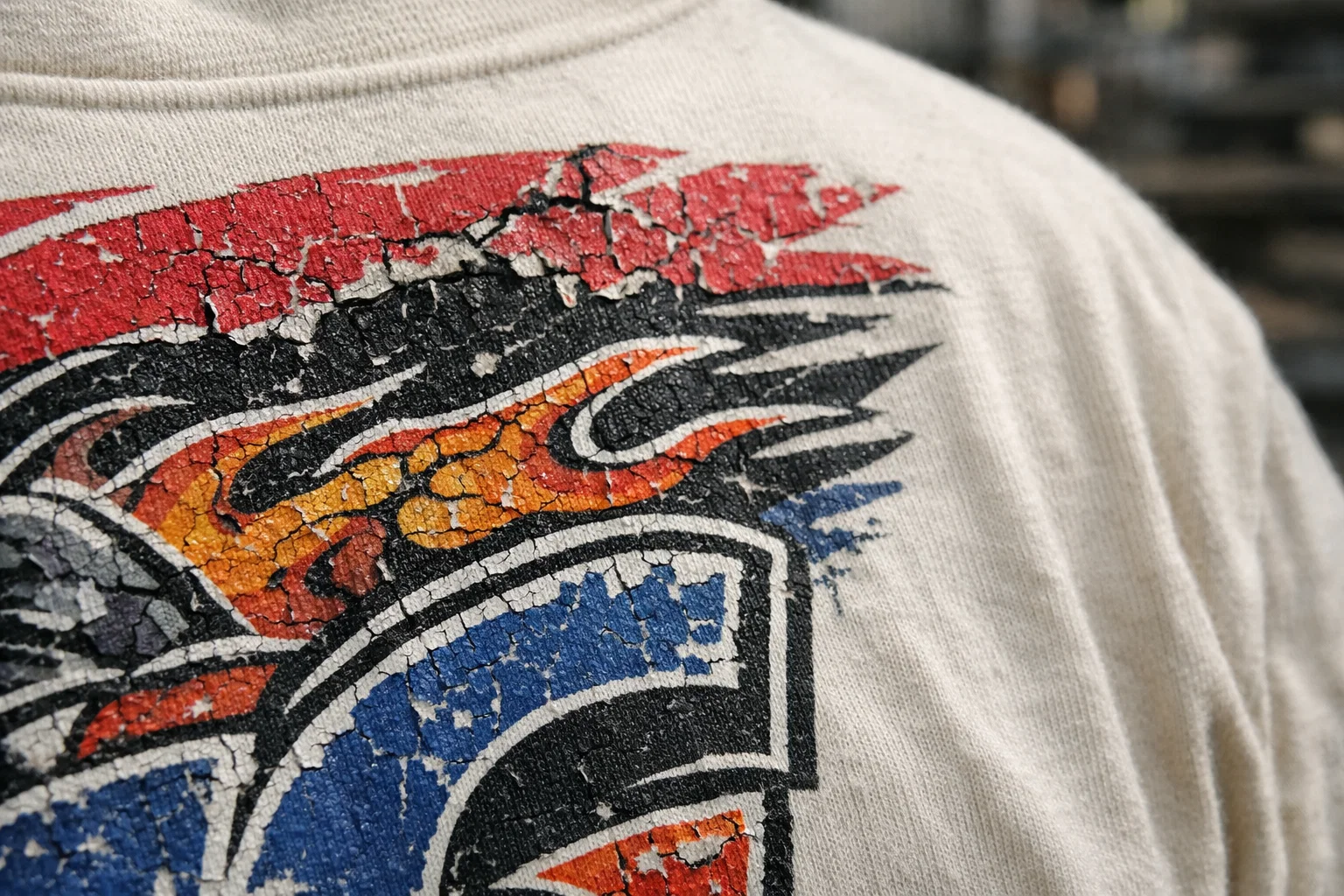
Cracking visible on a DTF transfer after repeated wash cycles, highlighting curing consistency challenges.
As more DTF-printed garments enter regular consumer use, print shops are reporting a noticeable rise in DTF transfer cracking complaints. The issue is becoming more visible after repeated wash cycles, even when transfers appear stable at the time of pressing.
Operators say the problem is less about a single material defect and more about how curing consistency performs under real-world conditions.
Wash Cycles Reveal Hidden Cracking Issues
In controlled shop environments, DTF transfers often pass visual inspection. The surface looks intact, edges appear sealed, and adhesion seems strong immediately after pressing.
However, once garments go through multiple wash and dry cycles, micro-fractures can begin forming across the ink layer. These cracks may start subtly but expand over time, especially on larger solid areas or designs with a heavy white underbase.
Several shop owners note that cracking tends to surface within the first few washes rather than months later, reinforcing that DTF transfer cracking is closely tied to curing precision.
Production Pressure and Weak Curing Control
Weak curing does not always mean underheating. In high-speed environments, variations in temperature distribution, dwell time, or powder melt consistency can create uneven bonding between ink and fabric.
Common contributing factors include:
-
Inconsistent curing unit temperature across the film width
-
Powder that appears melted but has not fully bonded
-
Transfers pressed before cooling completely
-
Heat press pressure fluctuations during continuous operation
Individually, these variables may not cause immediate failure. Combined, they reduce long-term flexibility, making cracking more likely once the garment flexes during wear and washing.
Cracking Versus Peeling
Unlike peeling, where edges lift from the garment surface, cracking typically occurs within the ink layer itself. The transfer remains attached but loses its smooth finish.
This distinction matters operationally. Peeling often signals adhesion issues, while DTF transfer cracking more frequently points to curing stability and ink film integrity.
Understanding the difference helps shops diagnose whether the issue originates in pressing technique, powder bonding, or thermal management.
Reprints Increase as Durability Expectations Rise
As customer expectations shift toward longer-lasting prints, cracking complaints are increasingly resulting in reprints rather than minor refunds.
Shop managers report that cracking-related returns now represent a measurable share of overall rework, particularly for large graphic prints on cotton garments. In some cases, these issues appear more frequently during same-day production, where cooling and inspection steps are shortened.
These patterns suggest that durability control may become as important as speed in high-volume environments.
Adjusting Curing Protocols
In response, some operators are revisiting curing processes. Adjustments include extending dwell time slightly, verifying temperature consistency with infrared tools, and reintroducing controlled cooling periods before stacking transfers.
Others are separating rush jobs from standard production to reduce variability during peak hours.
The goal is not to slow output dramatically but to tighten control where small deviations accumulate over time.
A Signal for Process Discipline
DTF printing remains highly versatile and capable of producing vibrant, durable designs. However, as turnaround expectations tighten, DTF transfer cracking is emerging as a measurable indicator of whether curing stability is operating within sustainable limits.
Print shops that monitor cracking rates alongside reprints are better positioned to identify workflow strain before it affects customer trust.
What Rising Cracking Rates Signal for Print Shops
As more garments move from the press to everyday wear, wash performance will continue to test curing precision.
DTF transfer cracking may serve as an early warning signal for shops operating at the edge of their process tolerance. Those that treat curing stability as a measurable variable rather than an assumption are more likely to maintain both output speed and long-term durability in an increasingly fast-moving market.
About the Author